Structural Drying and Dehumidification in Charlestown, MA
Buildings around Monument Square date from the mid 19th century, so drying is confirmed with moisture readings and done with care for older walls, floors and framing.
(888) 629-3140Call about drying a wet building- Moisture readings
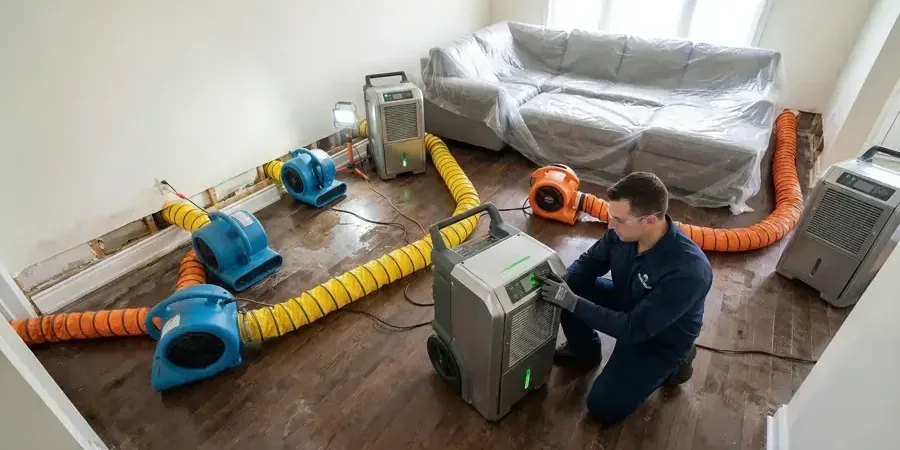
- Air movers placed
- Dehumidifiers running
First moves after structural drying and dehumidification
Safety comes first: stay clear of standing water near outlets, any sewage odor and sagging ceilings, and call before going closer.
- 1
Report the loss
The crew asks which rooms are wet and when the water left.
- 2
Keep doors shut
Closed rooms let dehumidifiers work on a smaller volume of air.
- 3
Leave the equipment on
Machines run steadily, and unplugging them stops the drying.
- 4
Expect checks
Readings are taken each visit to decide if more drying is needed.
What does structural drying and dehumidification cost in Charlestown, MA?
Structural drying typically costs from $1,500 to $22,000. One or two rooms is the least, and drying a whole floor or building is the most, with price following the area wet and the days needed.
These ranges reflect typical jobs and are not a quote. Water category, square footage, material class and how soon drying began drive the total; the water damage cost calculator gives a closer range and the walkthrough sets the scope.
Structural Drying and Dehumidification handled to the drying standard
Map
Wet materials are measured.
Place
Air movers and dehumidifiers are set.
Monitor
Readings are taken each visit.
Finish
Equipment leaves when dry.
How a structural drying and dehumidification dry-out moves from wet to dry
- 1
Find every wet spot
Infrared scans and moisture meters mark where the water went before any equipment is placed.
- 2
Get the water up
Extraction wands and pumps clear floors and pad first, since leftover water only stretches the drying.
- 3
Dry the air and the structure
Air movers sweep moisture out of walls and subfloor while LGR dehumidifiers pull it from the room.
- 4
Confirm it with numbers
Readings are taken daily against dry material, and the job closes when they agree within 2 to 4 points.
Pumping water out leaves the structure holding moisture, and drying is the stage that clears it. In Charlestown, Monument Square dates from the mid 19th century, so work there is paced by moisture readings and done with care.
How the drying works
- Air movers push dry air across wet surfaces and into cavities.
- Dehumidifiers remove the moisture that the air carries off.
- Ducting and small openings reach wall cavities and cabinets.
- Equipment is moved and rebalanced as the readings change.
Setting more machines does not dry faster, since placement and airflow matter more.
Why readings decide
Materials that look dry can still hold moisture, and wet framing stays damp long after the surface feels dry. The crew compares wet areas with known dry readings, and equipment stays until they match.
After extraction or a leak
Drying follows water extraction in most jobs, and it is also the whole job after a hidden leak. Burst pipes, ceiling leaks and floods all end here, with the main drying service covering the wider process.
Structural drying and dehumidification across Charlestown, MA
Drying runs across row houses, apartment buildings and offices from the Navy Yard to Monument Square and the blocks around Sullivan Square, Medford Street, Main Street and City Square.
The same service nearby: structural drying and dehumidification in Chelsea, East Boston, Everett.
Water damage restoration in Charlestown · every area covered
Structural Drying and Dehumidification questions in Charlestown, MA
Water still coming through?
Wet framing needs drying even when the floor looks dry.
Phone about dryingHow long does structural drying take?
Most jobs need several days. The time depends on the materials, the water type and the humidity, and readings decide when the equipment can leave.
Why are the machines so loud?
Air movers and dehumidifiers push a lot of air, and their noise is normal. The airflow is what pulls moisture out of walls and floors.
Can wet walls be dried without opening them?
Sometimes. Small holes and ducting can dry a cavity, but soaked drywall and insulation usually need to come out so air can reach the framing.
Does drying prevent mold?
Fast drying lowers the risk, since wet materials can grow mold within 24 to 48 hours. Readings confirm the framing and drywall have actually dried.
Is drying needed after a clean leak?
Yes. Clean water still soaks drywall and subfloors, so burst pipe water damage and similar losses end with drying until the readings are normal.
Building still damp? Call the drying crew
Say which rooms were wet and when the water was removed, and the crew will place equipment and take readings until the structure is dry.
(888) 629-3140Call about the damp rooms