Ceiling Leak Water Damage in Charlestown, MA
Charlestown mixes attached row houses with large housing complexes, so a ceiling leak often starts in the unit above and needs careful opening, extraction and drying on both levels.
(888) 629-3140Call about a wet or sagging ceiling- Careful ceiling opening
- Rooms above checked
- Insulation dried
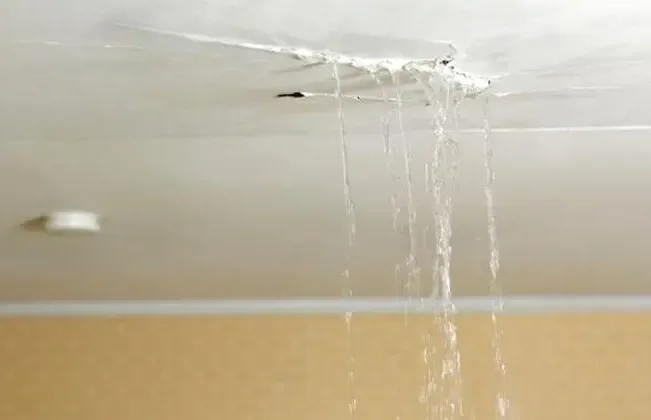
First moves after ceiling leak water damage
Safety comes first: stay clear of standing water near outlets, any sewage odor and sagging ceilings, and call before going closer.
- 1
Stop the source
If water is running overhead, the supply to that unit is shut off.
- 2
Clear the room
Furniture moves away, and people stay out from under a bulging ceiling.
- 3
Release trapped water
Only a professional should puncture a sagging ceiling to drain it.
- 4
Photograph the stains
Pictures of the ceiling and the room above support the claim.
What does ceiling leak water damage cost in Charlestown, MA?
Ceiling leaks usually cost between $1,200 and $18,000. A small stain dried in place is the lowest figure, while a collapse or a leak that ran for weeks costs the most.
These ranges reflect typical jobs and are not a quote. Water category, square footage, material class and how soon drying began drive the total; the water damage cost calculator gives a closer range and the walkthrough sets the scope.
Ceiling Leak Water Damage handled to the drying standard
Trace
The water path is found and mapped.
Open
The ceiling is cut where wet.
Extract
Standing water and wet insulation go.
Dry
Equipment dries the cavity.
How a ceiling leak water damage dry-out moves from wet to dry
- 1
Find every wet spot
Infrared scans and moisture meters mark where the water went before any equipment is placed.
- 2
Get the water up
Extraction wands and pumps clear floors and pad first, since leftover water only stretches the drying.
- 3
Dry the air and the structure
Air movers sweep moisture out of walls and subfloor while LGR dehumidifiers pull it from the room.
- 4
Confirm it with numbers
Readings are taken daily against dry material, and the job closes when they agree within 2 to 4 points.
A ceiling leak can come from the roof, a bathroom above or a pipe between floors, and the stain usually shows up away from the source. In an attached building the water often began in the unit overhead, so the first job is learning where it comes from and whether it is still running.
How a wet ceiling is opened
- A moisture meter outlines the wet zone before any cutting.
- Bulging drywall is released first so trapped water drains safely.
- Small cuts check the cavity, and larger ones follow only where readings show water.
- Soaked insulation is removed and bagged.
Keeping the cuts small leaves more of the ceiling in place for repair.
Drying above and below
Water that crossed the ceiling also wet the floor of the room above it and the contents below. Air movers dry the cavity from underneath while joists and subfloor are measured from above, and burst pipe water damage work applies when a supply pipe is the source.
Why speed matters here
Wet drywall and insulation can grow mold within 24 to 48 hours, so extraction and airflow start early.
Ceiling leak water damage across Charlestown, MA
Ceiling leak work covers attached row houses near Monument Square and City Square, large complexes such as the Bunker Hill and CharlesNewtown developments, and offices along Main Street.
The same service nearby: ceiling leak water damage in Chelsea, East Boston, Everett.
Water damage restoration in Charlestown · every area covered
Ceiling Leak Water Damage questions in Charlestown, MA
Water still coming through?
A wet ceiling can fall, so the water should be released safely.
Ring about the stainWhat if my ceiling is bulging?
A bulge means water is trapped above the drywall and the ceiling may fall. Clear the room and call, because the crew releases the water in a controlled way and removes the wet material.
Can a leaking ceiling dry in place?
A small stain can dry without opening when readings show the cavity is only lightly wet. Anything more usually needs an opening so air can reach the insulation and joists.
How do I know where the water starts?
In attached buildings it often starts in the unit above, so the source may belong to a neighbor. The crew traces the path with a meter and a thermal camera and records where it ended up on your side.
Does the leak above need extraction too?
Often. A floor or subfloor above can hold water, so extraction and drying may be needed there. See water extraction for how pumps and wands are used.
Will the whole ceiling be removed?
Not necessarily. Cuts follow the readings, and the aim is to remove only the wet drywall. A roof leak may need a roofer as well.
Ceiling leaking or sagging? Phone the drying crew
Say where the stain is and whether the water is still coming, and the crew will plan a careful opening and drying for both levels.
(888) 629-3140Phone about the stain