Water Extraction and Removal in Chelsea, MA
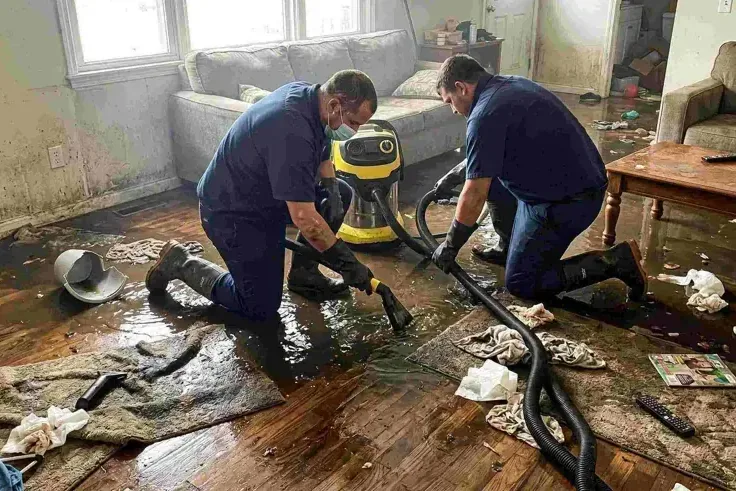
The extraction crew pulls standing water off floors, out of carpet and out of basements in Chelsea with truck-mounted and portable units, then sets drying equipment the same visit.
(888) 629-3140Standing water on the floor? Get it pumped out- Truck-mounted extraction
- Weighted carpet wands
- Basement pump-outs
What to do first about water extraction and removal
Do only what feels safe. Water near an outlet, a sewage smell or a sagging ceiling means stepping back and calling first.
- 1
Stop the source
Close the main shutoff or the fixture valve so no new water reaches the floor.
- 2
Cut power to wet rooms
Switch off those circuits at a dry panel, and never step into water near outlets.
- 3
Move what you can
Lift rugs, boxes and electronics onto a dry surface or a higher floor.
- 4
Leave the vacuum alone
A household shop vac cannot reach the pad and can trip a breaker in standing water.
What does water extraction and removal cost in Chelsea, MA?
Water extraction in Chelsea typically runs $1,200 to $8,500 including the first drying setup. One wet room with clean water is the low end; a full basement or Category 3 water costs more.
Ranges are typical, not a quote: the category of water, square footage, material class and how fast drying started move the number most. The water damage cost calculator narrows it; the moisture map on the walkthrough decides it.
How water extraction and removal is handled, step by step
Measure
Meters and a thermal camera mark the wet edges.
Extract
Truck-mounted wands pull water from floors and pad.
Pump
Submersible pumps clear deep basement water.
Set drying
Air movers and dehumidifiers start the dry-out.
The four stops of every water extraction and removal dry-out
- 1
Trace and measure
A thermal camera and a pinless meter show how far the water travelled before a single fan is placed.
- 2
Pull the water out
Truck-mounted extraction empties floors and carpet pad first, because every gallon left behind adds drying days.
- 3
Move the air, pull the humidity
Air movers push moisture out of plaster, framing and subfloor, and LGR dehumidifiers take it out of the room air.
- 4
Read it dry, then log it
Daily readings are compared with an unaffected room, and drying stops when the numbers sit within 2 to 4 points.
Extraction is the first and cheapest part of any dry-out. A pound of water pulled out with a wand is a pound the dehumidifiers never have to evaporate, so the extraction crew works floors, carpet and pad hard before a single air mover goes down. In Chelsea that often means a basement under a two-family or three-family, or a hallway that drains into the unit below.
How standing water comes out of an older building
Truck-mounted units do the heavy lifting from the street, with hoses run through a door or a basement window. Where a hose cannot reach a third floor, portable extractors and submersible pumps take over.
- Weighted wands that squeeze water out of carpet and pad in place
- Submersible pumps for basements holding several inches of water
- Squeegee wands for tile, vinyl and concrete
- Moisture readings on every surface the water touched
When carpet and pad can stay
Clean-water carpet extracted within the first day or two can often be dried in place. Pad soaked by gray water, and anything touched by a drain backup or tidal water, is cut out and bagged. The EPA guidance on flooded homes explains why porous materials hit by floodwater go.
What follows extraction
Once the floors stop squishing, the drying team sets air movers and LGR dehumidifiers and takes the first readings for the log. Safety notes for returning to a wet building are on Ready.gov's flood page, and the structural drying page covers the days that follow.
Water extraction and removal across Chelsea, MA
The restoration team covers ZIP 02150 from Bellingham Square out to Admirals Hill, Mill Hill, Prattville, the Box District, Addison-Orange and the low streets along the creek and the Island End River.
Nearby coverage reaches East Boston, Everett, Charlestown, Winthrop, Malden, Revere.
Related water damage services
Water Extraction and Removal questions in Chelsea, MA
Still dealing with it?
Water still standing on the floor? The extraction crew works 24/7.
Get the pumps on the wayHow quickly should water be extracted?
As soon as possible. Drywall and plaster wick water upward within hours, and mold growth can start within 24 to 48 hours, so extraction is treated as urgent around the clock.
Can a wet-dry vac do the job?
For a small spill, yes. For anything that soaked carpet pad or spread under walls, a shop vac leaves most of the water behind, and that water becomes extra drying days.
Does water extraction include drying?
Extraction removes the liquid water. Drying removes what soaked into materials, and that takes air movers, dehumidifiers and daily readings over several days.
Will the carpet have to be replaced?
Clean-water carpet extracted quickly can usually be saved. Pad soaked by gray or black water, and carpet touched by a drain backup or floodwater, is removed.
Can the crew reach a third-floor unit?
Yes. Hoses run up stairwells for most buildings, and portable extractors and pumps cover any spot the truck hoses cannot reach.
What does water extraction cost?
Most jobs fall between $1,200 and $8,500 with the first drying setup. The category of water, the square footage and how long the water sat set the number.
Every hour of standing water costs drying days. Start extraction now.
Water climbs plaster and soaks the floor below. The extraction crew empties it and the drying team takes over.
(888) 629-3140Bring the extraction truck tonight