Sewage Backup Cleanup in Chelsea, MA
Sewage that comes up through a basement floor drain, a toilet or a tub is cleaned as Category 3 from the start, with protective gear, containment and an EPA-registered antimicrobial before any drying begins.
(888) 629-3140Floor drain overflowing? Book the black-water crew- Category 3 from the start
- Full PPE and containment
- EPA-registered antimicrobial
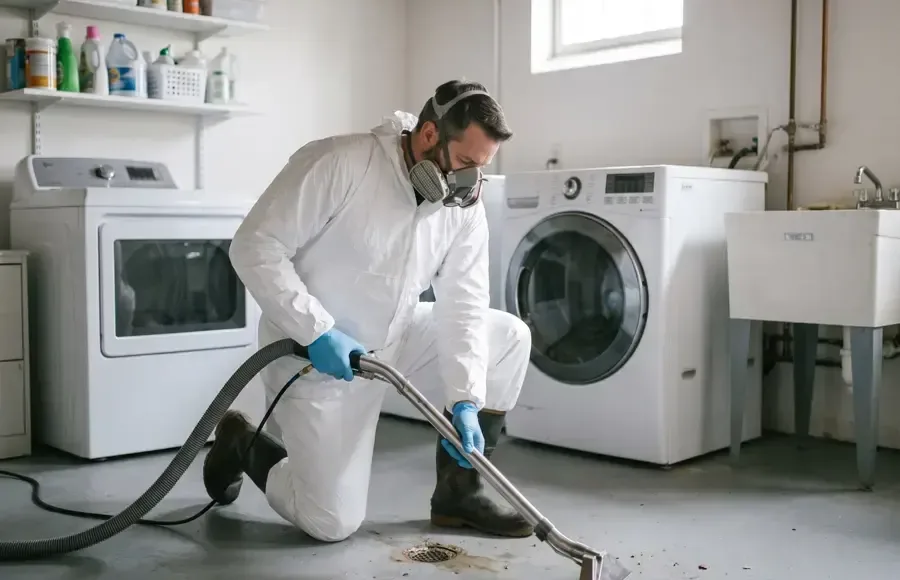
What to do first about sewage backup cleanup
Do only what feels safe. Water near an outlet, a sewage smell or a sagging ceiling means stepping back and calling first.
- 1
Stop using water
No flushing, showers, laundry or dishwashers anywhere in the building.
- 2
Keep people out
Children, pets and anyone with health concerns stay away from the area.
- 3
Do not touch it
Skip the household cleaner and the shop vac; sewage needs PPE.
- 4
Ventilate if safe
Open a window to the outside and keep interior doors shut.
What does sewage backup cleanup cost in Chelsea, MA?
Sewage backup cleanup in Chelsea typically costs $2,500 to $14,000. A small drain backup on bare concrete is the low end; a finished basement or a backup into living space costs more because more material is removed.
Ranges are typical, not a quote: the category of water, square footage, material class and how fast drying started move the number most. The water damage cost calculator narrows it; the moisture map on the walkthrough decides it.
How sewage backup cleanup is handled, step by step
Contain
Plastic barriers and HEPA scrubbers go up.
Extract
Sewage is pumped and extracted.
Remove and treat
Porous materials out, antimicrobial on.
Dry
Structure dried and verified.
The four stops of every sewage backup cleanup dry-out
- 1
Trace and measure
A thermal camera and a pinless meter show how far the water travelled before a single fan is placed.
- 2
Pull the water out
Truck-mounted extraction empties floors and carpet pad first, because every gallon left behind adds drying days.
- 3
Move the air, pull the humidity
Air movers push moisture out of plaster, framing and subfloor, and LGR dehumidifiers take it out of the room air.
- 4
Read it dry, then log it
Daily readings are compared with an unaffected room, and drying stops when the numbers sit within 2 to 4 points.
Much of Chelsea's older sewer system is combined, carrying rainwater and sewage in the same pipes. In a heavy storm those pipes can surcharge and push water back up through the lowest drain in a building, usually a basement floor drain. A blocked building sewer does the same thing on a dry day. Either way the water has passed through the sewer, so it is Category 3.
Why sewage cleanup is handled differently
Black water carries bacteria and other contaminants. Crews work in suits, gloves and respirators, seal the area with plastic and run HEPA air scrubbers so nothing spreads to clean rooms. The EPA page on combined sewer overflows explains how these systems work.
What comes out and what stays
- Carpet, pad and upholstered items the water touched are removed
- Drywall and insulation are cut out above the waterline, usually 2 feet or more
- Concrete, tile and sealed surfaces are cleaned and disinfected
- An EPA-registered antimicrobial is applied and left for its full dwell time
Only then do air movers and dehumidifiers go in.
After the cleanup
A plumber should clear or camera the building sewer if the backup was not storm related. Flood and sanitation tips are on the EPA flooded homes page, and basement flooding cleanup covers drying the rest of the space.
Sewage backup cleanup across Chelsea, MA
The restoration team covers ZIP 02150 from Bellingham Square out to Admirals Hill, Mill Hill, Prattville, the Box District, Addison-Orange and the low streets along the creek and the Island End River.
Nearby coverage reaches East Boston, Everett, Charlestown, Winthrop, Malden, Revere.
Related water damage services
Sewage Backup Cleanup questions in Chelsea, MA
Still dealing with it?
Sewage coming up through a drain? The black-water crew works 24/7.
Book the Category 3 cleanupIs sewage backup cleanup something I can do myself?
Not safely. Sewage is Category 3 water with bacteria and other contaminants, and cleanup calls for PPE, containment, removal of porous materials and an EPA-registered antimicrobial.
Why does sewage come up my basement floor drain?
Either the building sewer is blocked or, in heavy rain, the combined public sewer is overloaded and pushes water back toward the lowest opening.
What has to be thrown away after a sewage backup?
Porous items the water touched: carpet, pad, upholstered furniture, cardboard and drywall or insulation below the cut. Hard surfaces are cleaned and disinfected.
How long does sewage backup cleanup take?
Most jobs take three to six days from containment to final readings. The antimicrobial dwell time and drying of concrete and framing set the pace.
Does insurance pay for sewage backup cleanup?
Many policies need a separate sewer or water backup endorsement. Check your own policy and talk to your insurer before assuming coverage.
Is the smell dangerous?
Sewer gas and contaminated water are a health concern, so keep people out of the area and ventilate to the outside until the cleanup is done.
Sewage in the basement? Keep everyone out and call now.
Black water needs PPE, containment and disinfection before drying. The mitigation team handles all of it.
(888) 629-3140Clean up the sewage backup today