Structural Drying and Dehumidification in Everett, MA
Drying is verified with meters, not guesswork. Air movers and dehumidifiers are placed by moisture readings, adjusted as the materials change and removed only when every reading reaches its dry goal.
(888) 629-3140Need walls and floors dried? Start the equipment- Meters before equipment
- Daily readings
- Dry goal documented
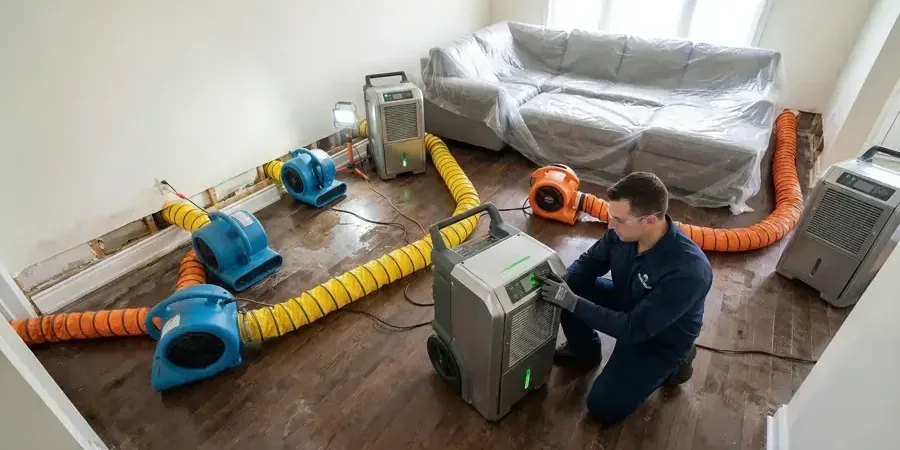
First moves after structural drying and dehumidification
Safety comes first: stay clear of standing water near outlets, any sewage odor and sagging ceilings, and call before going closer.
- 1
Map the moisture
Meters and a camera mark every wet surface.
- 2
Place equipment
Air movers and dehumidifiers go where the map points.
- 3
Read every day
Each wet area is metered and the setup adjusted.
- 4
Remove at the dry goal
Equipment leaves once readings match the dry reference.
What does structural drying and dehumidification cost in Everett, MA?
Drying cost follows the number of rooms, the materials and the days of equipment. One or two rooms cost the least, and drying a whole floor or building costs the most because more machines run for longer.
These ranges reflect typical jobs and are not a quote. Water category, square footage, material class and how soon drying began drive the total; the water damage cost calculator gives a closer range and the walkthrough sets the scope.
Structural Drying and Dehumidification handled to the drying standard
Map
Meters mark the wet materials.
Place
Equipment goes where the map points.
Monitor
Readings are taken every day.
Release
Equipment leaves at the dry goal.
How a structural drying and dehumidification dry-out moves from wet to dry
- 1
Find every wet spot
Infrared scans and moisture meters mark where the water went before any equipment is placed.
- 2
Get the water up
Extraction wands and pumps clear floors and pad first, since leftover water only stretches the drying.
- 3
Dry the air and the structure
Air movers sweep moisture out of walls and subfloor while LGR dehumidifiers pull it from the room.
- 4
Confirm it with numbers
Readings are taken daily against dry material, and the job closes when they agree within 2 to 4 points.
Every building dries differently, so drying here is planned from readings rather than from a standard equipment count. Meters and a thermal camera show how much water the materials hold, and the equipment plan is built around that map, with each room treated according to what it actually holds.
How the equipment is set
- Air movers are aimed along wet walls and floors
- Dehumidifiers remove moisture from the air as it evaporates
- Ducting and containment keep dry rooms dry
- Wet cavities are opened or vented to the air stream
Equipment is moved and trimmed every day. A room that dries early loses its machines so the rest of the building gets the airflow, and the electric load stays reasonable.
When drying is finished
A dry goal is set from unaffected material in the same building. Daily readings track every wet area toward it, and the equipment leaves only when each reading reaches that goal. Drying often follows water extraction and may continue after a burst pipe.
Structural drying and dehumidification across Everett, MA
Drying equipment goes in wherever water has reached, from a single room in Glendale or Woodlawn to whole floors along Broadway and the commercial streets near Route 16 and Gateway Center.
The same service nearby: structural drying and dehumidification in Chelsea, Malden, Charlestown.
Structural Drying and Dehumidification questions in Everett, MA
Water still coming through?
Walls or floors still wet? Ask the drying team to map the moisture.
Phone for drying helpHow is a dry goal chosen?
Readings are taken in similar materials that never got wet, and the wet areas are dried until they match. The goal is documented so the result can be shown.
Why do dehumidifiers run along with air movers?
Air movers evaporate moisture from surfaces, and dehumidifiers remove it from the air. Without the dehumidifier, the moisture simply moves into other materials.
Can drying be done without opening walls?
Sometimes. Small holes or vents can bring air into a cavity, but wet insulation or swollen drywall is removed because it traps moisture.
Why does the equipment stay for several days?
Moisture hides deep in framing and subfloors and releases slowly. Readings, not appearance, decide when it is dry, and shutting equipment off early can leave moisture behind.
How loud and how hot does the equipment get?
Machines are noticeable and warm the room, so the crew sets them to dry safely while keeping the rest of the building as usable as possible.
Drying stops only when the meters say so
Describe which rooms the water reached and how long they have been wet, and the drying team builds the equipment plan from there.
(888) 629-3140Get the dry-out planned