Water Extraction in Winthrop, MA
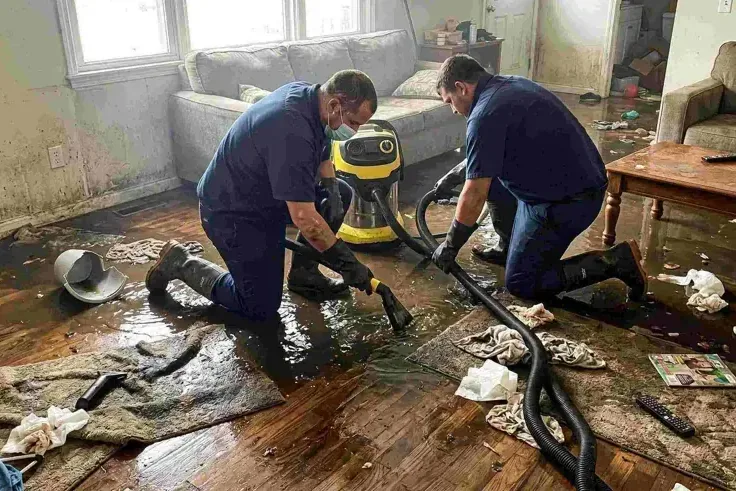
Standing water is pulled from floors and basements with pumps and truck-mounted extractors, then the wet materials are checked with meters so drying can start on the right surfaces.
(888) 629-3140Call to get the water out- Pumps and extractors
- Moisture meters
- Any hour
First moves after water extraction and removal
Safety comes first: stay clear of standing water near outlets, any sewage odor and sagging ceilings, and call before going closer.
- 1
Find the water's limits
Meters and a thermal camera show how far it spread past what is visible.
- 2
Remove standing water
Pumps and extractors clear the floor, starting with the deepest areas.
- 3
Draw water from porous finishes
Carpet, pad and wood floors are worked with extractors to pull out stored water.
- 4
Hand off to drying
Wet materials that cannot dry are removed and drying equipment is set up.
What does water extraction and removal cost in Winthrop, MA?
Water extraction jobs run $1,200 to $3,500 for one room of clean water, $3,500 to $8,500 for several rooms or a unit below, and $8,000 to $18,000 for a full basement or contaminated water.
These ranges reflect typical jobs and are not a quote. Water category, square footage, material class and how soon drying began drive the total; the water damage cost calculator gives a closer range and the walkthrough sets the scope.
Water Extraction and Removal handled to the drying standard
Walkthrough
Meters trace where the water has traveled
Removal
Pumps and extractors clear the standing water
Dry check
Readings show what has stayed wet
Hand-off
Drying equipment takes over from there
How a water extraction and removal dry-out moves from wet to dry
- 1
Find every wet spot
Infrared scans and moisture meters mark where the water went before any equipment is placed.
- 2
Get the water up
Extraction wands and pumps clear floors and pad first, since leftover water only stretches the drying.
- 3
Dry the air and the structure
Air movers sweep moisture out of walls and subfloor while LGR dehumidifiers pull it from the room.
- 4
Confirm it with numbers
Readings are taken daily against dry material, and the job closes when they agree within 2 to 4 points.
Water that sits on a floor or soaks into carpet pad keeps moving into drywall, trim and flooring. Extraction is the first job on any water loss in Winthrop, because every gallon removed now is moisture that does not have to be dried later. The extraction crew chooses equipment by the depth and type of the water.
How the water gets removed
- Submersible pumps for standing water several inches deep
- Truck-mounted extractors for large floors and basements
- Portable extractors and wands for stairs, closets and tight rooms
- Weighted tools that press water out of carpet and pad
Which tool comes out depends on what the water covers, never on a fixed routine, and the pass is repeated until the meter stops showing standing water.
Why shallow water still needs extraction
In March 2010 the town-owned gas-powered pumps could not clear basements holding only an inch or two of water, while in January 2018 firefighters were pumping flooded basements with 3 to 7 feet. Shallow water is the part ordinary pumps leave behind, and it keeps soaking into the bottom of walls and the edges of floors.
After the water is out
Once the water is out, meters check floors, walls and ceilings. Anything that cannot dry is cut out, and the rest moves to structural drying, where dehumidifiers and air movers finish what extraction started.
Water extraction and removal across Winthrop, MA
Extraction crews work across the peninsula, from Court Park and Cottage Park to Point Shirley, Ocean Spray and Cottage Hill, in homes, apartment buildings and small shops across ZIP 02152, at any hour.
The same service nearby: water extraction and removal in Chelsea, East Boston, Charlestown.
Water Extraction and Removal questions in Winthrop, MA
Water still coming through?
Standing water in the house? Call to get it pumped out.
Pumps for standing waterHow much water can be pulled out of a flooded floor?
Most of it. Pumps and extractors remove standing water and a large share of what soaked into carpet and pad, and the rest is left to dehumidifiers.
Is extraction needed if the floor only looks damp?
Often, yes. A damp surface can sit on a wet layer underneath, and meters show whether water remains in the pad, the subfloor or the wall base.
Can a shop vacuum handle a flooded basement?
A shop vacuum cannot move the volume or reach the shallow film left on the floor. Professional extractors work far faster and leave less behind.
What happens to wet carpet after extraction?
Carpet wet with clean water is sometimes lifted, dried and kept, while the pad usually goes. When sewage or flood water is involved, carpet and pad are removed.
Does extraction stop mold?
It removes the biggest source of moisture, but drying must follow. Wet materials left alone can start growing mold within 24 to 48 hours.
Is extraction covered by insurance?
Sudden leaks and burst pipes are often covered, and removal records help the claim. Flood coverage is usually separate, so the policy wording is worth checking.
Water extraction, from standing water to dry floors
The extraction crew removes standing water, checks what soaked in and hands the structure to the drying team.
(888) 629-3140Get the pumps started