Water Extraction and Removal in East Boston, MA
Beside Boston Harbor and Chelsea Creek, a rain or a failed pipe can leave water pooled across a floor. The extraction crew pulls it out and checks how far it soaked into the materials below.
(888) 629-3140Water pooled on the floor? Start the extraction- Truck-mounted unit
- Pumps for low spots
- Readings after pumping
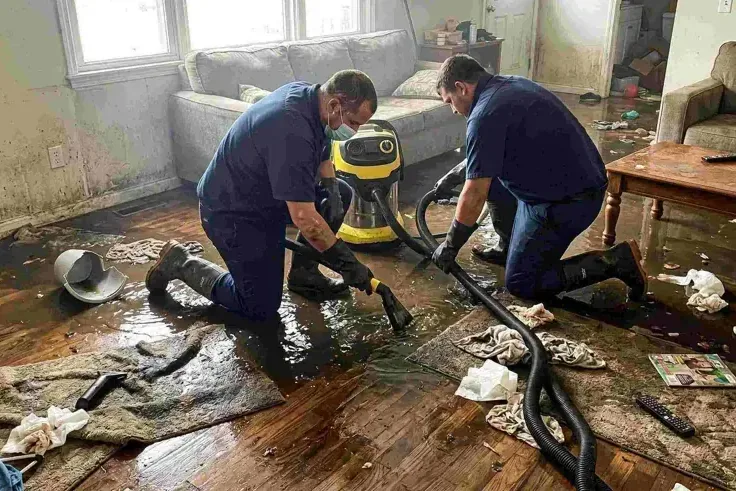
First moves after water extraction and removal
Safety comes first: stay clear of standing water near outlets, any sewage odor and sagging ceilings, and call before going closer.
- 1
Stop the source
Close the pipe or fixture valve and switch off power to wet rooms before anyone steps into the water.
- 2
Sort the water
The crew decides whether the water is clean, gray or contaminated and dresses for the worst case.
- 3
Pump and extract
Pumps, wands and the truck unit take the pooled water and the bulk held in carpet.
- 4
Read and record
Meters log what is still wet so the drying plan starts from numbers, not guesses.
What does water extraction and removal cost in East Boston, MA?
Extraction alone costs less than a full dry-out. One room of clean water often runs $1,200 to $3,500, while a large or contaminated loss can climb toward $18,000.
These ranges reflect typical jobs and are not a quote. Water category, square footage, material class and how soon drying began drive the total; the water damage cost calculator gives a closer range and the walkthrough sets the scope.
Water Extraction and Removal handled to the drying standard
Assess the room
Moisture meters map where the water went.
Remove the water
Pumps and wands clear the surface water.
Dry what remains
Air movers and dehumidifiers pull out the rest.
Confirm dry
Readings must reach the dry target first.
How a water extraction and removal dry-out moves from wet to dry
- 1
Find every wet spot
Infrared scans and moisture meters mark where the water went before any equipment is placed.
- 2
Get the water up
Extraction wands and pumps clear floors and pad first, since leftover water only stretches the drying.
- 3
Dry the air and the structure
Air movers sweep moisture out of walls and subfloor while LGR dehumidifiers pull it from the room.
- 4
Confirm it with numbers
Readings are taken daily against dry material, and the job closes when they agree within 2 to 4 points.
Standing water keeps soaking into flooring, trim and wall bases for as long as it sits there, so removing it is the first job. The Boston Water and Sewer Commission notes that wet weather combined with storm surge can overwhelm existing infrastructure and cause localized flooding in Boston, which is one more reason not to wait on a flooded room.
What the extraction crew removes
- Clean water from a split pipe or an overflowing fixture
- Gray water from a washer, dishwasher or tub overflow
- Storm water that came in from outside
- Contaminated water, handled as Category 3 from the start
Each type is sorted before any pump starts, because the category sets the protective gear and the disposal route.
How the water leaves the building
On open floors, a truck-mounted unit with a long hose reel moves the bulk of the water outdoors. Wands lift it from carpet and pad, and portable pumps drain the low spots a hose cannot reach. Wet padding is cut out and bagged so it stops feeding moisture back into the room.
Readings after the pumping stops
Removing the visible water is not the end of the job. The mitigation team reads the floor, wall bases and subfloor with moisture meters, then hands the numbers to the drying plan described under structural drying. Those same notes help when an adjuster asks what was wet.
Water extraction and removal across East Boston, MA
The extraction crew works across East Boston, from Maverick Square and Eagle Hill to Jeffries Point, Orient Heights, Bayswater, Wood Island and the streets near Chelsea Street and Border Street.
The same service nearby: water extraction and removal in Chelsea, Charlestown, Everett.
Water damage restoration in East Boston · every area covered
Water Extraction and Removal questions in East Boston, MA
Water still coming through?
Water pooled on the floor? Call now, any hour.
East Boston water pumped out helpHow soon should extraction start after a leak?
As soon as the source is stopped and the room is safe to enter. Water spreads into flooring and wall bases while it sits, so starting early limits how much has to be torn out.
Can a wet carpet be saved?
Often, when the water was clean and removal began early. The pad is usually replaced because it holds water and dries slowly. Contaminated water changes the answer, and the carpet is discarded.
What is the difference between extraction and drying?
Extraction removes liquid water with pumps, wands and vacuums. Drying uses air movers and dehumidifiers to pull absorbed moisture out of materials, and it is checked against readings.
Is storm water handled differently?
Yes. Water that came in from outside or from a drain may carry contamination, so the crew treats it as Category 3 until proven otherwise, with protective gear and a different disposal route. See sewage backup cleanup for that process.
What can be done before the crew starts?
Shut off the water source if it is a pipe, keep power off in wet rooms, lift valuables onto dry surfaces and keep a household vacuum away from standing water.
Standing water is still spreading. Get it out today.
The extraction crew removes the pooled water, then the drying team reads the floor and walls to see what soaked it up.
(888) 629-3140Start the water removal