Water Extraction in Malden, MA
Standing water is pumped and vacuumed out of homes and apartment buildings, starting with the unit where it began, so floors, walls and framing can begin to dry.
(888) 629-3140Call now to get the water out- Pumps and wands
- Source traced first
- Drying starts early
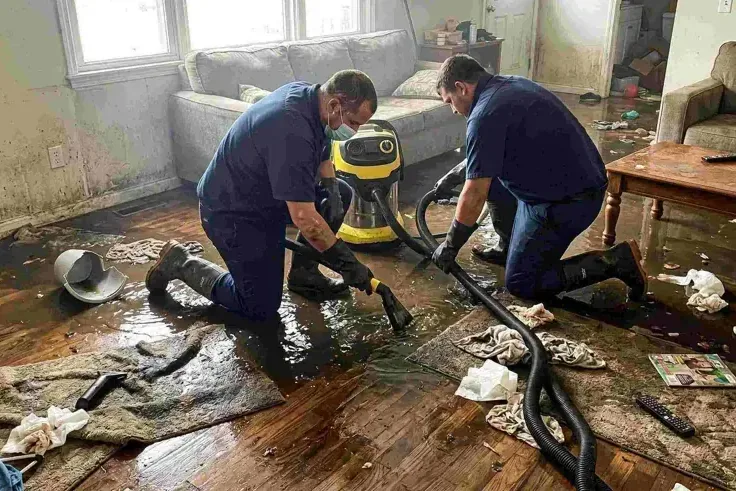
First moves after water extraction and removal
Safety comes first: stay clear of standing water near outlets, any sewage odor and sagging ceilings, and call before going closer.
- 1
Locate the source
The team traces the water to a pipe, appliance, roof or drain and shuts it off so no more water keeps coming in.
- 2
Pump out the bulk
Pumps and a truck mounted unit remove standing water, while wands pull what soaks into floors.
- 3
Take readings
Moisture meters map which floors, walls and ceilings are still wet below the surface.
- 4
Hand off to drying
Wet materials are sorted, and equipment is set for the drying phase that follows.
What does water extraction and removal cost in Malden, MA?
Extraction alone costs less than a full dry-out, and the price follows the number of rooms reached and the category of the water. These are the typical bands.
These ranges reflect typical jobs and are not a quote. Water category, square footage, material class and how soon drying began drive the total; the water damage cost calculator gives a closer range and the walkthrough sets the scope.
Water Extraction and Removal handled to the drying standard
Stop it
The water source is isolated and shut off
Remove it
Pumps and wands clear standing water
Measure it
Meters map the moisture left behind
Plan the dry
Equipment and removal steps are set
How a water extraction and removal dry-out moves from wet to dry
- 1
Find every wet spot
Infrared scans and moisture meters mark where the water went before any equipment is placed.
- 2
Get the water up
Extraction wands and pumps clear floors and pad first, since leftover water only stretches the drying.
- 3
Dry the air and the structure
Air movers sweep moisture out of walls and subfloor while LGR dehumidifiers pull it from the room.
- 4
Confirm it with numbers
Readings are taken daily against dry material, and the job closes when they agree within 2 to 4 points.
Water extraction comes before every other step, and it decides how much of a building has to be torn out later. In Malden, where about 59% of occupied homes are rented, the first task is often finding which home or unit the water came from and who has to be told.
What the extraction crew takes out
- Standing water on floors, in stairwells and in low rooms
- Water held in carpet, pad and the top layer of flooring
- Pooled water behind baseboards and under cabinet bases
- Contaminated water, handled with gear and containment
Extraction is finished when no standing water remains and meter readings show what the structure still holds, which sets up the structural drying plan.
Why the age of the building matters
Census figures put the median home at a 1950 build year, and about 45% of units date to 1939 or earlier. Layered floors and tight cavities let water travel, and with 5,987 units in 2-unit buildings and 3,380 in 3-or-4-unit buildings, water from one kitchen often ends up in the rooms below. Extraction follows the water through every level, not only the room where it showed up.
After the water is out
Wet materials are sorted into those that can dry in place and those that must go. Moisture readings and photos are logged for the insurer, and the rest of the local dry-out follows from them.
Water extraction and removal across Malden, MA
Extraction work runs across Malden, from Bellrock and Edgeworth to Maplewood, Linden, Ferryway, Forestdale and Faulkner, in single homes, 2-unit buildings and larger apartment buildings of every age.
The same service nearby: water extraction and removal in Chelsea, Everett, Charlestown.
Related water damage services nearby
Water Extraction and Removal questions in Malden, MA
Water still coming through?
Water standing in a Malden home or building right now? Calling early keeps extraction simple and the damage smaller.
Call for water removalHow fast does water need to come out?
As quickly as it can be done safely, because water soaks into drywall, subfloor and framing, and mold can start in 24 to 48 hours.
Can a rented unit be extracted without the landlord?
The owner or manager normally has to approve work on the building, so the tenant should report the leak right away and photograph the water while the landlord is reached.
What is the difference between extraction and drying?
Extraction removes liquid water. Drying removes the moisture still held inside materials, which pumps cannot reach, and it uses air movers and dehumidifiers.
Is sewage water extracted the same way?
The pump process is similar, but contaminated water needs protective gear, containment and removal of porous materials it touched, so it is priced and handled as Category 3.
Does extraction include removing wet carpet?
Carpet and pad that sat in Category 3 water are discarded. Clean water carpet can sometimes be lifted, dried and reinstalled, depending on how long it stayed wet.
What should be moved before work starts?
Small furniture, electronics and personal items, if it is safe to touch them. Heavy furniture and anything near live outlets should be left for the team.
Get the water out before it soaks in
The extraction crew starts with the source, pumps out the standing water and sets up drying. Call any hour to get a plan moving.
(888) 629-3140Call to start extraction