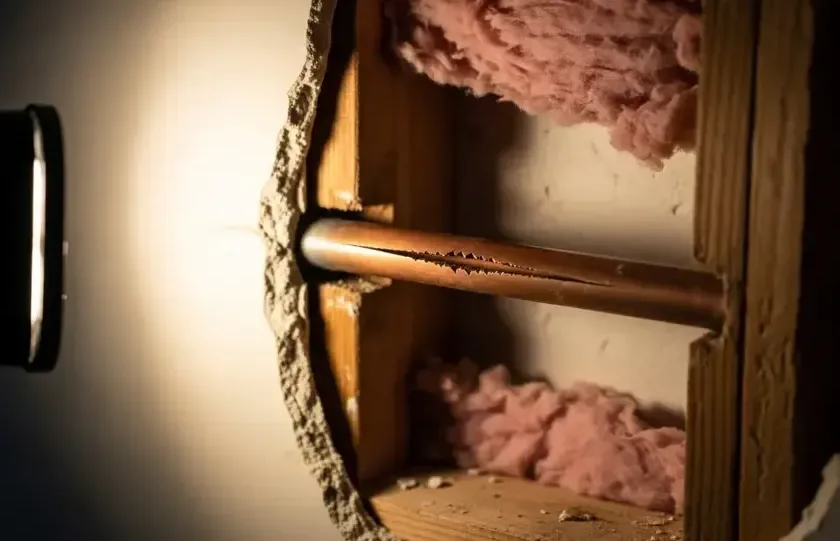
The city advises a simple check for a hidden leak: stop all water use for at least a half hour, then see whether the water meter dial has moved. A dial that keeps turning means water is going somewhere, and in a dense city that somewhere may be inside a wall.
Key takeaways
- The city's check is to stop all water use for at least a half hour and see whether the meter dial moved.
- A moving dial points to a leak but not to its location, so the next step is a search.
- The city names leaky toilets, faucets and garden hoses as the most common reasons for high water use.
- Hidden supply pipe leaks and appliance hose leaks can soak walls, floors and ceilings before a stain shows.
- A leak that reached drywall, insulation or a floor needs extraction and drying, not just a repair.
The city's half hour meter test
The Everett Water & Sewer Department, part of the Department of Public Works, operates the water distribution system. Drinking water enters the city from the MWRA at five locations and runs through a system with 724 fire hydrants, about 1,800 valves and over 8,200 service connections.
At the end of that system sits each building's own meter, and the meter makes a handy leak detector.
- Turn off every faucet, appliance and fixture, and make sure nobody is using water.
- Find the water meter and note where the dial sits.
- Wait at least a half hour without using any water.
- Read the dial again. If it moved, water is escaping somewhere.
Common leaks the city names
The city says the most common reasons for high water use are leaky toilets, faucets and garden hoses. Those leaks waste water and raise bills, and most of them end up in a drain or on the ground outside.
The leaks that damage buildings hide in places a toilet flapper never reaches.
- A split or pinholed supply pipe inside a wall, floor or ceiling.
- A washer, dishwasher or ice maker hose that seeps behind the appliance.
- A fitting under a sink or behind a toilet that weeps onto a cabinet floor.
- A water heater fitting or tank leaking in a closet or utility space.
Narrowing down the source after the dial moves
A moving dial says that water is escaping, and a short search narrows down where. Each step below removes one suspect.
Garden hoses and outdoor taps are the easy ones to rule out first, since the city names garden hoses as a common cause of high use.
- Close the shutoff valve to one appliance at a time, then repeat the dial check.
- Look under sinks and behind toilets for damp cabinet floors or wet fittings.
- Drop a little food coloring into each toilet tank and wait without flushing. Color in the bowl means the flapper leaks.
- Check the water heater area and any closet that holds a tank.
- Close the main valve. If the dial still moves, the leak sits ahead of that valve.
Where hidden water goes in a dense city
Everett has 18,827 housing units and 17,466 households, with about 2.9 persons per household, in a city of about 14,647 people per square mile.
Close quarters mean a leak does not stay put. Water follows pipes, joists and wall cavities, and it can show up as a stain in a room far from the source.
- Along supply pipes through the openings in floors and ceilings.
- Down a wall cavity from a bathroom or kitchen.
- Across a subfloor to a door threshold or a baseboard.
- Into the ceiling below, spreading along the joists.
Signs the dial test cannot show
A meter test finds a leak that is running right now. Some damage announces itself in other ways, and some builds up quietly.
Signs on the surface
Surfaces often tell the story first.
- Paint that bubbles or peels, or wallpaper that lifts at a seam.
- A ceiling stain that keeps growing after the water is shut off.
- Floorboards that cup or feel soft near a wall.
- A musty smell near a wall, a cabinet or a closet.
- Water bills that climb with no change in how the household uses water.
Why slow leaks do the most harm
A fast burst is obvious. A slow leak is quiet, and the water has weeks to work.
A pinhole in a supply pipe can wet the same stretch of drywall and framing again and again, so the damage builds up behind the surface long before a stain appears.
By the time paint bubbles or a floor cups, the material behind it has usually been wet for a long while. That is why a dial that moves is worth chasing even when nothing looks wrong.
What happens after the leak is found
Finding the source comes first. The water is shut off at the closest valve, and a plumber repairs the pipe, hose or fitting.
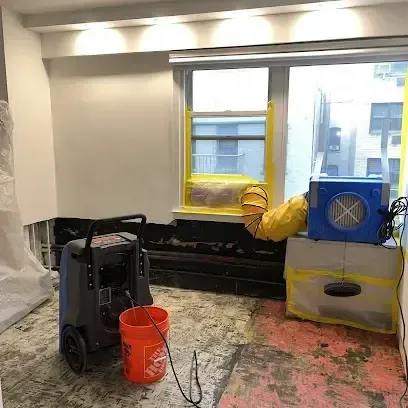
Drying follows. On a burst pipe water damage job, the team extracts standing water, opens wet drywall or flooring where readings call for it and sets air movers and dehumidifiers.
When the source is a hose or a supply connection on a machine, the work is closer to appliance leak cleanup, with attention to the cabinet, the floor under the unit and the room below.
The job ends when structural drying readings match a dry reference, not when the surfaces feel dry to the touch.
A leak check before a sale or after a long absence
Meter readings come up at other moments too. When a home is sold, a meter technician reads the inside water meter within 2 weeks of closing to produce the final water and sewer bill.
Landlords and property managers can use the same test between tenants. An empty unit has nobody to notice a drip, and a dial that moves in a vacant unit is worth a look before the next lease starts.
A half hour check before listing a home, or after a long stretch of vacancy, can catch a leak before a buyer's inspector or a damp ceiling does. The Everett water damage pages list the other problems that show up in local buildings.
Questions
Does a moving dial always mean a damaging leak?
No. A leaky toilet or faucet can move the dial too. The test shows that water is escaping, and the search decides whether it is a harmless drip or hidden water inside a wall.
What if the dial is still but a ceiling is stained?
The leak may be intermittent, such as a washer hose that only leaks under load, or the water may come from a neighbor's unit. Moisture readings help narrow it down.
Is a half hour long enough?
The city advises at least a half hour. A longer window helps catch a very slow leak.
Can a hidden leak be dried without opening a wall?
Sometimes. Moisture readings and a thermal camera show whether the cavity is wet. If it is, a small opening or drilled ports let drying air in.
When is the meter read at a home sale?
For a final water and sewer bill, a meter technician reads the inside water meter within 2 weeks of closing.
Should a leak be repaired before drying starts?
The water is shut off first so nothing new enters the building. The repair and the extraction can then go ahead side by side, and drying runs once the source is closed.