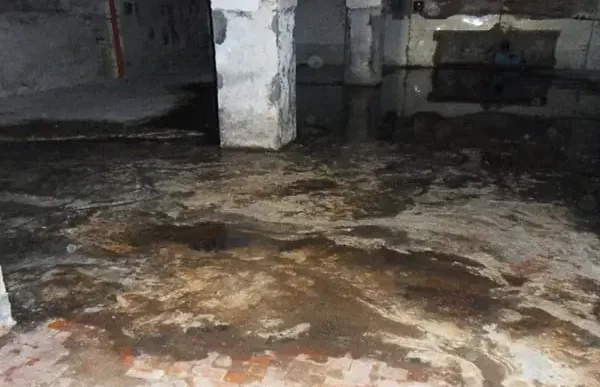
Winthrop is a town on a peninsula at the north entrance to Boston Harbor, and flooded basements are the usual storm complaint. When the deep water is gone, the job is only partly done.
Key takeaways
- The March 2010 nor'easter dropped about 8.5 inches of rain over three days, and firefighters assisted more than 35 flooded-basement calls.
- In January 2018, firefighters pumped basements around the clock with water 3 to 7 feet deep, and handled 150 calls against about 12 on an average day.
- In 2010 the town-owned gas-powered pumps could not clear basements holding only an inch or two of water.
- Flood water in a basement is not clean water, so it is handled as contaminated from the first step.
- Drying the structure is what stops dampness from lingering after the pumps are shut off.
What the 2010 and 2018 storms showed
A nor'easter in March 2010 dropped about 8.5 inches of rain on the town over three days. Firefighters assisted more than 35 flooded-basement calls, and some basements held 1.5 to 3 feet of water.
In January 2018 a tidal surge flooded about 70 buildings. Firefighters pumped basements around the clock, with water from 3 to 7 feet deep, and handled 150 calls against about 12 on an average day.
The fire chief has said it generally takes a tide of 13 feet or higher to cause many flooding problems here. Rain and tide can also work together, which is why heavy rain at high tide gets attention.
Those numbers are local history, not a forecast. They show the scale a small town can face, and why professional extraction and drying equipment matters when many households need help at once.
Safety first when a basement floods
Basement water can hide live wiring. If water is above the outlets or touches the electrical panel, the power stays off until an electrician says it is safe.
Water also hides other hazards: slick steps, stored chemicals and heavy items that shifted when the water rose.
- Stay out of standing water when the panel or outlets are wet.
- Never run a household vacuum or a power tool on a wet floor.
- Shut off gas appliances if their controls were underwater.
- Keep children and pets out of the space.
- Photograph the water level and the damage before moving anything.
Why the last inch of water matters
In March 2010 the town-owned gas-powered pumps could not clear basements holding only an inch or two of water. A pump pulls down deep water, and then the layer that remains is too thin for it to draw.
That thin layer still soaks carpet, the bottom of walls and anything stored on the floor. A water extraction crew uses units built to lift shallow water, including from carpet, floor seams and low corners.
Thin water also hides. A basement that looks nearly dry can still hold a film under mats, behind stored boxes and in floor cracks, and moisture readings find it.
- Shallow water wicks upward into drywall, baseboard and wall framing.
- Boxes and furniture standing on the floor absorb it.
- A film left behind keeps humidity high in the whole space.
- Hard flooring can hold water in its seams and under mats.
Flood water in a basement is not clean
Storm flood water picks up soil, fuel residue and bacteria on its way in, and it can mix with sewage when drains overflow. It is handled as contaminated water, not as a simple clean leak.
The town's Department of Public Works maintains the sewers, and the regional flow is treated at the Deer Island Treatment Plant on Deer Island. When a basement fills during a storm, nobody can assume the water that came in was clean.
Because of that, cleaning is more than drying. Surfaces that touched flood water are washed and treated with a disinfectant, and the crew works in protective gear.
- Carpet, pad and rugs that sat in the water are usually removed.
- Drywall that wicked the water upward is cut out above the water mark.
- Insulation in wet wall cavities is pulled and bagged.
- Cardboard, paper and upholstered items that soaked are discarded.
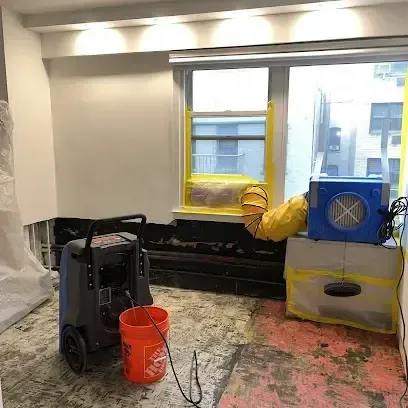
Cutting back and cleaning
After extraction, basement flooding cleanup means opening what holds moisture. Wet drywall is cut above the water mark, insulation is pulled and baseboards come off so the bottom of the wall can dry.
Surfaces that stay are scrubbed and treated with a disinfectant. Concrete, block, sealed wood and metal can usually be saved this way.
Cutting back is not demolition for its own sake. The aim is to open only what the readings show is wet and to leave sound material in place.
- Cut drywall above the visible water mark, then check behind it with a moisture meter.
- Pull wet insulation and bag it for disposal.
- Remove baseboard and trim to open the bottom of the wall.
- Scrub concrete, framing and other hard surfaces, then disinfect them.
Drying the structure
Structural drying is what makes the cleanup last. Dehumidifiers pull water vapor out of the air while air movers push dry air across floors and the bottoms of walls.
Readings are taken in framing, slab and masonry at each visit, and the equipment stays until every reading matches a dry reference. A basement can feel dry long before it is.
Drying takes several days in most basements. The length depends on how deep the water was, how long it stood and what the walls and floor are made of.
Mechanical equipment in a flooded basement, such as a furnace, boiler, water heater or electrical panel, is checked by a qualified technician before it is restarted.
Getting ready before the next storm
The floodgates at Short Beach are closed ahead of coastal storms, and public works crews opened the Lewis Lake gates to lower the lake during the March 2010 nor'easter. Households can prepare on their own scale too.
Shoreline protection is part of the picture. Winthrop Beach was renourished by the state Department of Conservation and Recreation and held up well in the January 2018 storm.
For the other problems that follow a storm, the Winthrop water damage pages list each service.
- Lift stored items onto shelves or pallets instead of leaving them on the floor.
- Know where the electrical panel and the water shutoff are.
- Keep a list of contacts for a restoration team, a plumber and the property manager.
- Photograph the basement in its normal condition so any change is easy to show.
Questions
Why can't a basic pump remove the last inch of water?
A utility pump stops drawing once the water gets shallow, which leaves a layer behind. Extraction units made for shallow water finish the job.
Is flood water in a basement Category 3?
Storm and tidal flood water is handled as Category 3 because of what it carries in. Water that looks clear can still carry bacteria and soil.
Can drywall be saved after a basement flood?
Drywall that wicked contaminated water is usually cut out above the water mark. Material higher up that reads dry can often stay.
How are furnaces and water heaters handled after a flood?
A qualified technician checks them before they are restarted. Wet controls, wiring and burners are not safe to run until they have been inspected.
When is a flooded basement considered dry?
When moisture readings in the slab, walls and framing match a dry reference. A room can feel dry well before that point.
Does a rain flood need different work than a tidal flood?
The steps are the same: safety, extraction, cutting back, cleaning and drying. Tidal flood water carries more sediment, and any flood water is handled as contaminated.