Charlestown is a neighborhood of the City of Boston on a peninsula with the Charles River, the Mystic River and Boston Harbor around it. City planning materials describe much of the waterfront as filled land, so for a property manager, tidal flooding is a building problem, a tenant problem and a schedule problem all at once.
Key takeaways
- Tidal and storm water is cleaned as Category 3, whatever the weather looked like.
- In March 2018 the Mystic River topped the seawall at the Schrafft's lot and put 2 or 3 feet of water around close to 100 cars.
- A day one plan covers safety, utilities, photographs, extraction and the order of work by floor and tenant.
- Occupied buildings dry in phases, with every space tracked on its own readings.
- Notice to tenants goes out early, in plain words, with what is closed and what comes next.
Two kinds of flooding on a filled waterfront
The city's consultant describes two flood types for Charlestown: coastal flooding from storms, and stormwater flooding from rain ponding in low-lying areas. City planning materials describe significant water-adjacent parts of the neighborhood as filled land, now the most exposed to flooding.
Charlestown is open to fringe flooding when harbor water rises above ground elevation. City flood maps show 100-year flood pathways reaching under the Tobin Bridge by 2050 and into the center of the neighborhood by 2070, and those are projections, not events that have happened.
What the 2018 storms showed
Two storms in 2018 put real numbers on the risk for lots, streets and developments.
January 4, 2018
During the January 4, 2018 blizzard, floodwaters poured over the Navy Yard seawalls and inundated the drydocks.
March 2018
The Mystic River topped the seawall at the Schrafft's parking lot, and about 2 or 3 feet of water surrounded close to 100 employee cars in a lot that usually stays dry.
Navy Yard streets held about six to eight inches of water, and Terminal Street had about 2 feet over the road when the Little Mystic Channel overflowed. The NewTown development around the channel was also inundated.
At Amelia Earhart Dam on the Mystic River, water came within a foot of cresting, according to the Mystic River Watershed Association.
Day one for a property manager
The first day is about people, power and proof. Tenants stay out of wet areas, any electrical room or panel the water touched stays off until cleared, and photographs are taken before cleanup starts.
Vehicles in a flooded lot are a separate problem. Water standing in a lot picks up fuel, oil and debris, so cars are moved only when the water has dropped and the area is safe.
- Close and mark every wet area, including stairwells and elevator lobbies.
- Shut off power to wet circuits and keep it off until an electrician clears them.
- Photograph the tide mark, damaged stock, equipment and furnishings.
- List the affected tenants and spaces, floor by floor.
- Bring in a team for water extraction as soon as it is safe to enter.
Building systems after tidal water
Tidal water finds the lowest spaces in a building first, and those are often elevator pits, mechanical rooms, storage areas and parking levels.
Equipment in those spaces needs a technician's inspection before it is restarted. Drying then works around live and dead circuits with care.
- Elevator pits and machine rooms.
- Electrical, data and communications rooms.
- Boiler, pump and HVAC spaces.
- Storage rooms holding stock, files or records.

Extraction, cleaning and phased drying
The wet work splits into two stages, and the second stage can run for days while the building stays in use.
Extraction and Category 3 handling
Water that came over a seawall or up from a channel is Category 3. A coastal flood cleanup crew extracts the standing water, then removes porous materials that cannot be cleaned through, such as wet carpet, ceiling tile, insulation and the bottom of drywall.
Hard floors, concrete, metal and framing are washed and disinfected. Stock and files that sat in the water are sorted into what can be wiped and dried and what must be discarded.
Drying an occupied building in phases
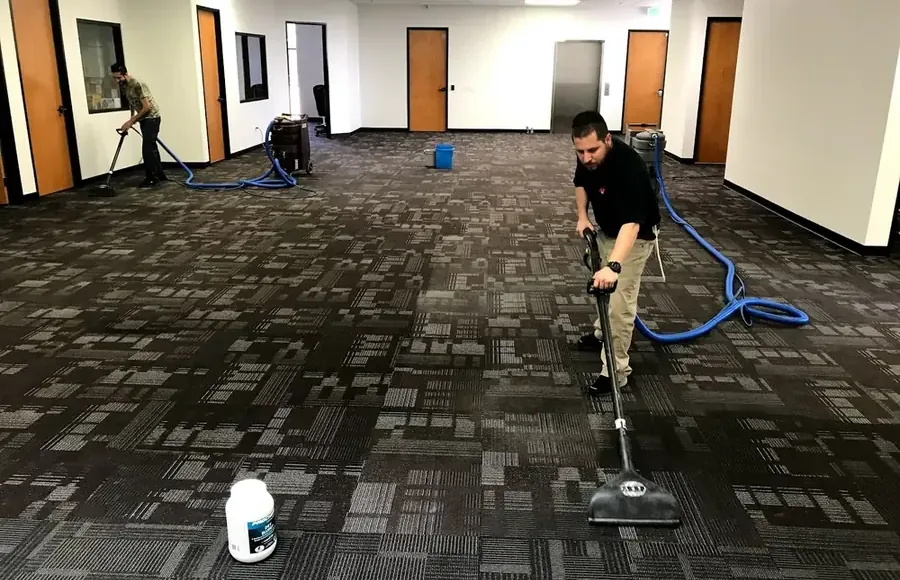
Commercial buildings rarely close completely, so commercial water damage work runs in phases. The crew dries the worst hit floors first, then moves outward, with each space tracked on its own moisture log.
Offices at the Navy Yard, shops along Main Street and the large office campus at Schrafft's Center each need a different plan, because use, finishes and tenant needs differ.
- Sequence floors by damage and tenant need, not by convenience.
- Seal off wet zones with containment so dry zones can stay open.
- Log readings per space, per visit.
- Release a space only after its readings match a dry reference.
Records for owners and insurers
Owners and insurers want to see what the water reached, how long it stayed and what was done. A clean record starts on day one and grows with every visit.
The restoration team keeps the moisture log and the photographs. The manager keeps the tenant notices, the list of closed spaces and the costs of emergency measures.
- Dated photographs of each space before cleanup and after drying.
- Moisture readings for every visit, by room.
- Copies of every tenant notice, with the date sent.
- Receipts and invoices for extraction, equipment and temporary repairs.
Telling tenants and planning for the next tide
Tenants want three answers: what is closed, for how long, and what happens next. A short written notice that covers all three, sent early, prevents most of the confusion.
Mixed use buildings with shops on the ground floor and offices above need two notices, because a shop owner worries about stock and opening hours while an office tenant worries about access and records.
The city introduced a flood resilience study for the Charlestown Navy Yard and Little Mystic Channel in spring 2025 and coordinates with the US Army Corps of Engineers. Whatever the study produces, a manager can keep a simple plan ready: a contact for the restoration team, a shutoff map and a photographed record of the building in normal condition.
The Charlestown water damage pages cover the other situations a building can face, from burst pipes to roof leaks.
Questions
Is tidal water in a lobby treated differently from rain water?
Yes. Tidal and channel water carries sediment and runoff and is handled as Category 3, while rain that leaks through a roof usually starts out cleaner.
Can a business stay open during drying?
Often in part. Containment and phased drying let dry areas stay in use while the wet ones are closed and worked on.
What should be photographed before cleanup starts?
The tide mark on walls, the depth of water on floors, damaged stock and equipment, and the building's condition room by room. Photographs go first, before anything is moved or thrown out.
How are wet files and stock handled?
They are sorted by material and by how long they sat in the water. Some items can be wiped, dried and kept, and porous items that soaked up contaminated water are discarded.
Does a floor need to be torn out if it looks fine?
Not always. Moisture readings show whether water traveled under a surface, and hard materials that read dry after cleaning can stay.
How soon should tenants be told?
As early as the facts allow. A first notice can say which areas are closed, who is handling the work and when the next update will come.