Roof Leak and Ice Dam Water Damage in East Boston, MA
Roof water rarely shows up where it enters. It runs along framing, soaks insulation and surfaces as a stain somewhere lower. The mitigation team traces the leak from the attic down and dries what got wet.
(888) 629-3140Water coming through the ceiling? Start tracing it- Attic checked first
- Infrared images of wet ceilings
- Unit below dried too
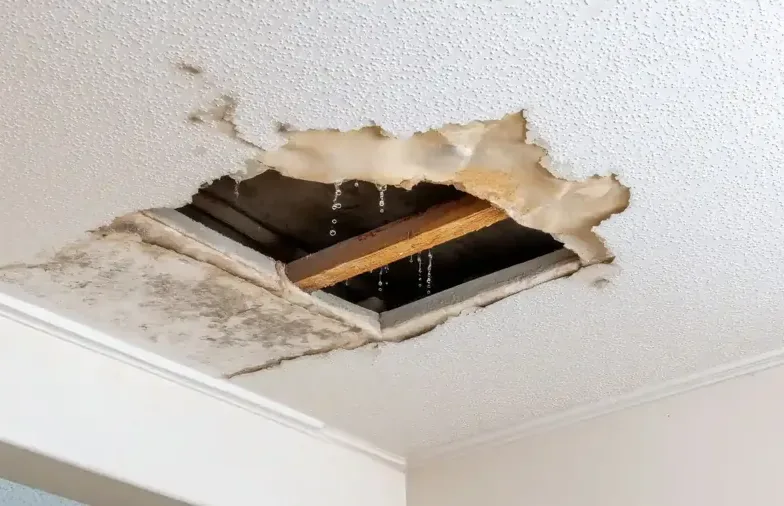
First moves after roof leak and ice dam water damage
Safety comes first: stay clear of standing water near outlets, any sewage odor and sagging ceilings, and call before going closer.
- 1
Catch the water
Buckets and plastic sheeting protect floors while the leak is still active.
- 2
Tarp the roof
A roofer covers or repairs the opening so no new water gets in.
- 3
Find the wet path
Meters and infrared images follow the water from the attic to the ceiling and walls.
- 4
Open and dry
Wet insulation and soft drywall come out, then equipment dries the cavity.
What does roof leak and ice dam water damage cost in East Boston, MA?
Roof leak cost follows how far the water traveled below the roof. One ceiling area often runs $1,500 to $4,000, while a top-floor leak that reached the unit below can climb to $20,000.
These ranges reflect typical jobs and are not a quote. Water category, square footage, material class and how soon drying began drive the total; the water damage cost calculator gives a closer range and the walkthrough sets the scope.
Roof Leak and Ice Dam Water Damage handled to the drying standard
Trace
Infrared images follow the water down.
Open
Wet insulation and soft drywall come out.
Dry
Air movers and a dehumidifier run in the cavity.
Verify
Readings must settle before closing up.
How a roof leak and ice dam water damage dry-out moves from wet to dry
- 1
Find every wet spot
Infrared scans and moisture meters mark where the water went before any equipment is placed.
- 2
Get the water up
Extraction wands and pumps clear floors and pad first, since leftover water only stretches the drying.
- 3
Dry the air and the structure
Air movers sweep moisture out of walls and subfloor while LGR dehumidifiers pull it from the room.
- 4
Confirm it with numbers
Readings are taken daily against dry material, and the job closes when they agree within 2 to 4 points.
A roof leak is a trail, and the stain on the ceiling is only its far end. The drying team follows that trail from the attic down, because wet insulation and framing hold moisture long after the shingles are patched.
How an ice dam pushes water inside
When snow melts and refreezes at the roof edge, the ice can hold back meltwater and force it up under shingles and into the attic. The result is wet insulation, a stained ceiling and, if it goes unnoticed, damp wall tops. A roofer repairs the roof; the drying job covers the damage below it.
What gets checked from the attic down
- Insulation that is wet and no longer insulating
- Rafters and roof deck with high moisture readings
- Ceiling drywall that is stained, sagging or soft
- Wall tops and light fixtures where water travels
Meter readings and infrared images map the spread, so only the affected areas get opened.
Drying, and the unit below
In a building with several units, water entering at the top floor can reach the one beneath. The response team dries both spaces, removing wet insulation, opening ceilings only where readings require it and running equipment until the numbers settle. See ceiling leak water damage for the ceiling side.
Roof leak and ice dam water damage across East Boston, MA
Roof leak drying runs across East Boston, from Maverick Square and Day Square to Jeffries Point, Orient Heights, Eagle Hill and Bayswater, including the older grid streets laid out in the 1830s.
The same service nearby: roof leak and ice dam water damage in Chelsea, Charlestown, Everett.
Water damage restoration in East Boston · every area covered
Roof Leak and Ice Dam Water Damage questions in East Boston, MA
Water still coming through?
Water coming through the ceiling? Call now, any hour.
Get the leak dried outHow do ice dams cause leaks?
Melting snow refreezes at the roof edge and forms a ridge of ice that traps water behind it. The trapped water backs up under shingles and drips into the attic.
Who fixes the roof and who dries the building?
A roofer repairs the opening, and the drying team handles the wet attic, ceiling and walls. The two jobs run side by side so no new water gets in.
Does wet attic insulation have to be replaced?
Usually yes. Wet insulation loses its value and holds moisture against rafters and the ceiling, so it is removed and replaced after the cavity is dry.
Should a sagging ceiling be opened?
Yes, carefully. Water trapped above a bulge adds weight and risks a collapse, so the crew cuts it open in a controlled way and clears the area below first.
Can a roof leak reach the unit below?
It can. Water that enters at the top floor of a building with several units can drip through the floor into the space beneath, which then needs structural drying too.
A roof leak is still soaking the structure. Begin drying it.
The mitigation team follows the water from the attic down, opens only what is wet and dries it to meter readings.
(888) 629-3140Start the roof leak dry-out