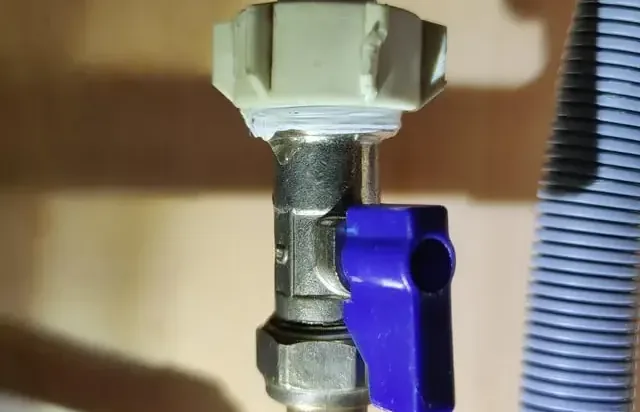
In an older Census count, 10,584 of the 14,832 occupied units in East Boston were renter occupied, so appliances often sit over another household's ceiling. A hose that splits on a washer or dishwasher can send water through the floor to a neighbor, and the neighbor is usually the first to notice.
Key takeaways
- The Boston Water and Sewer Commission says a drastic jump in water use can signal a leak, and that leaks can develop behind walls or in areas that are not visible.
- Washer, dishwasher and refrigerator hoses fail slowly at the fittings or suddenly at the hose body.
- Closing the valve behind the appliance stops the water, and cutting power protects against shock.
- Water from an appliance can travel through floor openings, along pipes and into the ceiling of the unit below.
- Both floors are dried: the source floor, and the ceiling and wall cavities underneath.
Why a hose leak becomes a two unit problem
Of the 14,832 occupied units in that older count, 10,584 were rented and 4,248 were owner occupied. With so many rented flats, a laundry hose or a dishwasher connection can sit just above someone else's ceiling.
The household with the appliance may not see the damage at all, because the water often runs out of sight. The first sign can be a stain, a drip or a damp smell downstairs.
Dishwashers and refrigerators add to the list. A supply connection under a dishwasher or behind a refrigerator can leak slowly for weeks without a sound.
Warning signs at the appliance
The utility advises checking faucets, toilets and exposed pipes for drips when water use jumps. The same habit works for appliance hoses.
Washers vibrate, and vibration works fittings loose over time. A fitting that was dry last month can weep now.
- A hose that bulges, cracks, kinks or looks frayed near the end.
- Rust, white crust or green stains at a fitting or valve.
- A damp floor, warped flooring or a soft spot beside the appliance.
- A musty smell near the washer, dishwasher or refrigerator.
- A water bill that jumps with no change in how the household uses water.
Stopping the water
Speed counts, because a pressurized hose keeps pushing water for as long as the valve is open. These steps shut off the supply and make the room safe.
After the water is off, open the cabinet doors or the access panel to let air in. The appliance stays off until the hose has been replaced.
- Close the hot and cold valves behind the washer.
- For a dishwasher, close the valve under the sink. For a refrigerator, close the small valve that feeds the ice maker or the water dispenser.
- If water stands around the outlet, turn off the breaker for that circuit before touching the cord.
- Soak up what a towel can reach and move belongings off the wet floor.
- Knock on the door below, and photograph the room, the hose and the water.
How the water finds the unit below
Floors in a multi-family building are not sealed boxes. Water follows the easy paths.
A kitchen or laundry room in the unit below can sit well away from the appliance above. The stain often appears at a light fixture, a vent or a corner where the ceiling meets a wall.
Through the floor
Water runs to pipe openings, to the edge where the floor meets the wall and to gaps in the subfloor. From there it drops into the joist bay and soaks the ceiling below.
Along pipes and inside walls
The utility notes that leaks can develop behind walls or in areas that are not visible. A hose leak can run down a wall cavity beside the supply pipes and show up far from the appliance.
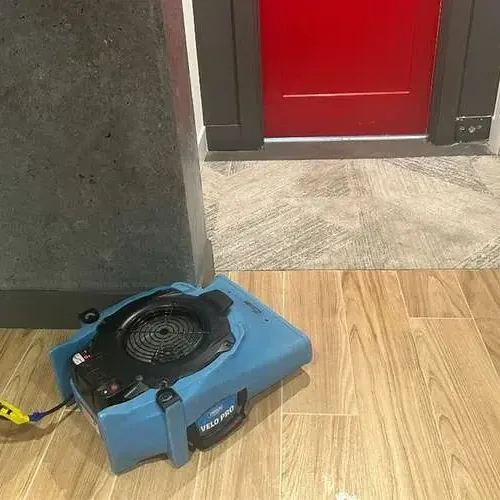
Opening and drying both floors
A team handling appliance leak water damage starts at the source, extracting water from the floor and checking cabinets, flooring and the wall behind the appliance. It then moves to the ceiling below.
A ceiling leak water damage check follows, with a moisture meter to decide whether the ceiling can be dried in place or must be opened. After that, structural drying equipment runs on both levels.
Flooring decisions come from the readings. Vinyl and laminate over a wet subfloor are often lifted, while sealed tile may stay in place.
Drying equipment runs in the source unit and in the unit below at the same time, so neither household waits on the other.
- Extract water from flooring, cabinets and the area behind the appliance.
- Check the ceiling, walls and joist bay in the unit below.
- Open only what the readings call for.
- Run dehumidifiers and air movers on both floors until readings match a dry reference.
Small checks that prevent big leaks
Most hose failures show warning signs for a long time before they let go. A few quick checks catch them.
Some households add a small catch pan under the washer or a water alarm near the machine. These cost little and give a warning before a stain does.
- Replace old rubber hoses with reinforced braided hoses.
- Close the washer valves when the household is away for several days.
- Leave enough room behind the machine to see the fittings.
- Check under the dishwasher and behind the refrigerator for damp spots.
- Learn where each shutoff valve is before it is needed.
Who to tell and what to keep
The landlord or manager should hear about a hose leak promptly, along with the household below. A failed hose is photographed and kept until the repair and any claim are settled, because it shows what caused the damage.
A short written note helps the landlord and the household below follow the same facts.
Other water problems in the neighborhood are covered on the East Boston water damage pages.
- The date, the time and who noticed the leak first.
- Which appliance failed and which valve was closed.
- Which units and rooms were affected.
- What was done to stop the water, and when.
Questions
Can a washer hose leak go unnoticed for weeks?
Yes. A slow weep at a fitting can sit behind the machine, soak the edge of the floor and show up only as a stain below.
Which valves should be closed when a hose bursts?
The hot and cold valves behind the washer. For a dishwasher it is the valve under the sink, and for a refrigerator it is the small valve that feeds the ice maker or water dispenser.
Is the ceiling in the unit below always damaged?
No. If the leak is stopped fast and the floor is dried, the ceiling may stay unaffected. Readings in the unit below tell for sure.
Does a leak behind a wall show up on the water bill?
Often, if it is large or has run for a long time. The utility notes that a drastic jump in water use can signal a leak.
Should the hose be thrown away after it fails?
Photograph it first and keep it until the repair and any claim are settled. The failed hose shows what caused the damage.
Are dishwasher leaks as serious as washer leaks?
They can be. A dishwasher uses less water per cycle than a washer, but a slow leak under the cabinet can soak flooring and the ceiling below before anyone notices.