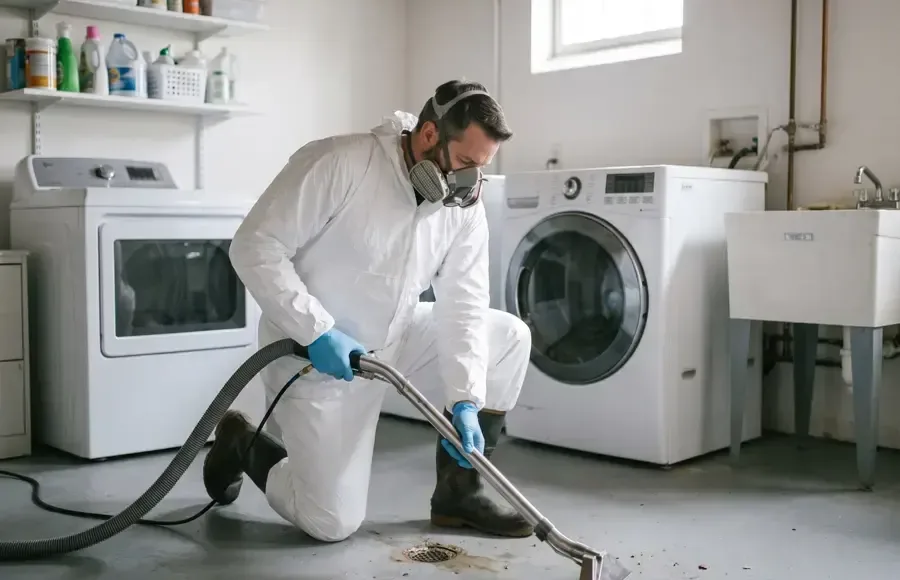
East Boston, known as Eastie, is a neighborhood of the City of Boston, and the Boston Water and Sewer Commission (BWSC) is separating its combined sewers in phases. For a household or a landlord, the practical question is simple: if sewage ever shows up inside a building, what happens next?
Key takeaways
- BWSC is separating combined sewers in phases, and Phase IV runs from September 2025 to fall 2031.
- Separation adds storm drains for stormwater and leaves the existing combined sewer to carry sewage.
- Any sewage inside a building is Category 3 water, and the cleanup treats it that way from the first step.
- Porous materials touched by sewage are removed, while hard surfaces are cleaned, disinfected and dried.
- A backup is reported promptly to the property owner or manager, with photographs taken before anything is moved.
What sewer separation changes underground
A combined sewer carries stormwater and sewage in the same pipe. When heavy rainfall inundates it, the overflow can discharge to Chelsea Creek and Boston Harbor.
Sewer separation builds new storm drains to carry stormwater, while the existing combined sewer carries sewage. The aim is fewer overflows to the creek and the harbor.
BWSC also says that increased wet weather combined with storm surge can overwhelm existing infrastructure and cause localized flooding in Boston.
Phase IV: where the work is and how long it lasts
Phase IV is the fourth phase of the program and focuses on the Eagle Hill and Maverick Square neighborhoods. It is built under five contracts, with the first starting in September 2025 and the last ending in fall 2031.
The work does more than add storm drains. It also replaces or repairs deteriorated sewer pipes and replaces aged water mains.
A long street project is not a forecast of backups. It is useful context: crews will be working in these streets through fall 2031, and a household that knows what the work covers can make sense of the notices it receives.
The street limits listed for Phase IV include these:
- Eagle Square and East Eagle Street.
- Chelsea Street and Bennington Street.
- Day Square and Saratoga Street.
- Bremen Street, Neptune Road and Route 1A.
What a sewage backup looks like inside a building
A backup shows up at the lowest drain in the building: a floor drain, a tub, a shower or a toilet. Early signs are gurgling, slow drains, a sewer smell and dirty water rising where it should not.
A backup can start in a building's own drain pipe or in a larger sewer pipe, and the first steps do not depend on which. A plumber and the utility sort out the cause while the cleanup goes ahead.
- Stop using sinks, toilets, showers and washers so no more water enters the drain.
- Keep people and pets out of the wet area.
- Photograph the water and every affected item before moving anything.
- Tell the property owner or manager promptly.
- Leave extraction and removal to a trained team in protective gear.
Why sewage is Category 3 from the start
Sewage carries bacteria and viruses that make people sick, and it soaks into porous materials quickly. It does not matter how diluted the water looks.
Any sewage in a building is treated as Category 3 water.
Even a short backup matters. A thin layer of sewage on a floor wicks into baseboards and the bottom of drywall, so the affected area is usually larger than the visible puddle.
What gets removed
Anything porous that touched sewage is bagged and taken out, because washing cannot reach all of the contamination.
- Carpet, pad and area rugs.
- Drywall and insulation that wicked the water upward.
- Cabinet kick plates and particle board.
- Stuffed furniture, mattresses and cardboard storage.
What is cleaned and kept
Concrete, tile, sealed wood, metal and framing are scrubbed, treated with a disinfectant and rinsed. Only then are they dried.
The cleanup sequence and the drying that follows
A sewage job follows a fixed order so that contamination is never carried from a wet room into a dry one.
The team sets up barriers at the doorway, puts on protective suits, gloves and respirators, and works from the cleanest edge of the room toward the worst of it.
- Contain the affected rooms and cover floor paths to the exit.
- Extract the liquid and any solids with equipment made for sewage.
- Remove and bag porous materials before they can wick further.
- Scrub and disinfect hard surfaces, then rinse.
- Dry the structure and take readings until they match a dry reference.
- Check the finished area before repairs begin.
Drying after the cleaning
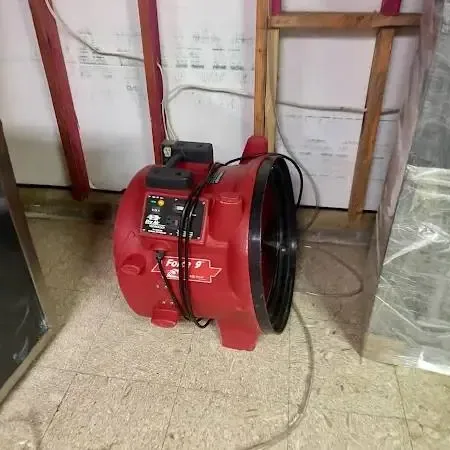
Once contaminated material is out and surfaces are clean, structural drying begins. Dehumidifiers and air movers run in the cleaned rooms, with moisture readings taken at each visit.
The crew checks framing, the floor and the lower wall against a dry reference. Equipment stays until those readings match, not until a set date.
Disinfecting comes before drying, so the equipment is never blowing contaminated air around a room.
Landlords, tenants and neighbors
In an older Census count, 10,584 of the 14,832 occupied units in the neighborhood were renter occupied. A backup in a rented unit can involve a tenant, a landlord and sometimes a neighbor below.
Each person has a different job, and the cleanup moves faster when everyone knows theirs.
- Tenants report the problem, take photographs and stay out of the wet area.
- Landlords and managers approve the work and arrange access to the unit.
- Neighbors below check ceilings and walls for stains or drips.
- The restoration team checks adjoining rooms and units with moisture readings.
Documenting a backup and reaching the right people
Photographs, a short written timeline and a list of ruined items help with any later claim or landlord conversation. Damaged items are kept until they have been photographed, unless they are a health risk.
Which pipe failed, the one inside the building or the one in the street, is a question for the utility and a plumber. A sewage backup cleanup team does not wait for that answer before it starts.
For other water problems in the neighborhood, the East Boston water damage pages cover leaks, burst pipes and storm water. The full sewage cleanup process is laid out step by step on the main service page.
Questions
Does sewer separation work cause backups?
The stated aims of the project are to reduce combined sewer overflows to Chelsea Creek and Boston Harbor and to replace deteriorated sewer pipes and aged water mains. A backup that happens anyway is handled the same way.
Is sewage ever treated as less than Category 3?
No. Any sewage inside a building is Category 3, whether it is a small floor drain overflow or a flooded room.
Can a rug or carpet that touched sewage be saved?
Usually not. Fibers and backing hold contamination that cleaning cannot fully reach, so soaked carpet and pad are removed.
Who should be told about a backup in a rented unit?
The property owner or manager should hear about it promptly, with photographs attached. Sewage in the street is also worth reporting to the utility.
Why is drying still needed after the cleaning?
Framing and subfloor stay damp long after the visible water is gone. Drying brings them back to a dry reference so repairs can start.
Is a floor drain backup after heavy rain different from a toilet backup?
The source differs but the handling does not. Both bring sewage into the building, so both are Category 3, and both call for the same removal of wet porous materials.