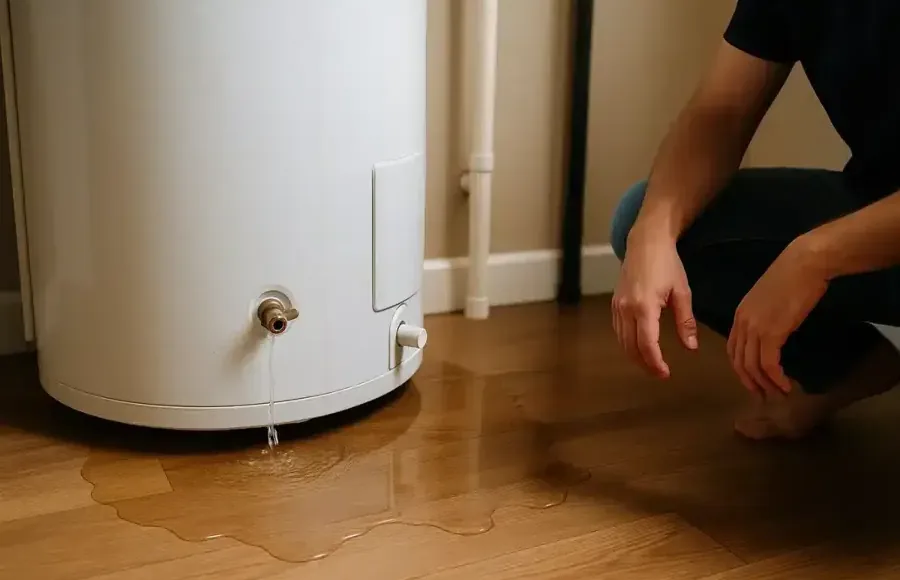
In Chelsea, 10,148 of 13,716 occupied homes are rented, about 74 percent. When a tank fails in a rented building, the water rarely stays in one apartment, which makes the first steps a shared job for the tenant, the landlord and the household below.
Key takeaways
- About 74 percent of occupied homes in the city are rented, so a tank failure often touches more than one household.
- The first moves are to shut off the cold water feeding the tank and to turn off its power or fuel.
- A soaked closet or utility floor needs extraction before the water reaches the walls and the ceiling below.
- The wall behind the tank, the floor edges and the ceiling below are checked with moisture readings.
- A leaking tank is replaced by a plumber, and the drying team works to the readings, not to the replacement date.
Why rentals raise the stakes
The city has 14,165 housing units. Of those, 3,871 sit in 3-or-4-unit buildings and 2,278 in 2-unit buildings, and 7,020 were built in 1939 or earlier.
In a building with several flats, a tank in a closet or utility space can sit directly over another household's ceiling. A leak there is a problem for at least two homes.
Older buildings can hide unusual layouts, so one of the first jobs is to find where the water actually went.
The first steps at the tank
Hot water from a failed tank can scald, so people stay clear of the stream until the supply is off. The order below keeps the first moves safe and simple.
Once the water is off, open a window or door for ventilation if the weather allows. Do not turn the tank back on until a plumber has looked at it.
- Close the cold water valve on the pipe that feeds the top of the tank.
- Turn off the electric breaker, or set a gas control to off. If there is a gas smell, leave and call from outside.
- Lift boxes, rugs and stored items off the wet floor.
- Photograph the tank, the water and the damage before cleanup begins.
- Tell the landlord or manager, and knock on the door of the household below.
How a tank fails
Tanks fail in two ways, and each one leaves a different picture.
A slow weep
A weeping fitting, valve or seam leaks a little at a time. The floor around the tank stays damp and rust stains show, and the wall behind the tank can be soaked before anyone notices.
A sudden release
A tank wall that opens up can release most of its contents at once. The water spreads across the floor and runs under baseboards and into the nearest openings.
Warning signs before failure
Tanks often give hints before they let go.
- Rust-colored hot water.
- A puddle or a damp ring at the base of the tank.
- Rumbling or popping sounds while the water heats.
- Corrosion on the fittings and valves.
Extraction and wall checks
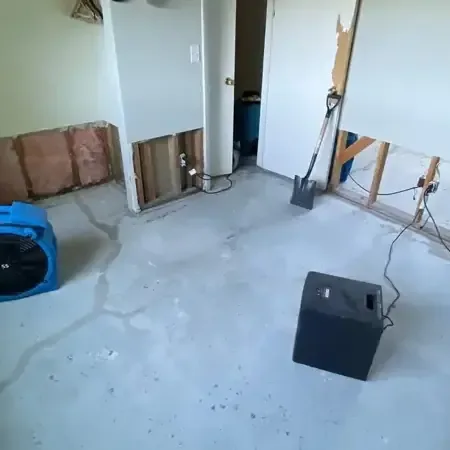
A water extraction crew removes the standing water first, because water left on the floor keeps wicking into the bottom of the walls. Moisture readings then show how far the water traveled.
The wall behind the tank gets special attention. Water runs down the back of a tank and into the wall, where it is easy to miss.
Cardboard boxes and stored fabric near a tank soak up water quickly. The crew sorts what can be dried from what has to go.
Rugs and mats soaked by tank water are lifted so the floor beneath them can be extracted and dried.
- Extract the standing water and lift soaked rugs and boxes.
- Check the wall behind and beside the tank with a moisture meter.
- Pull baseboard where readings show water in the wall bottom.
- Look for water at the door threshold and along the nearest floor edge.
The ceiling below
When the tank sits over another flat, water follows gaps in the floor, pipe openings and joists into the ceiling below. A stain, a bulge or a drip in the unit underneath tells the downstairs household first.
A ceiling leak water damage team checks the ceiling with a moisture meter. A small stain with low readings can sometimes be dried in place, while a soft or sagging ceiling is opened so wet insulation can come out.
Any of these signs in the unit below is a reason to call, even if the water above has been shut off.
- A stain that keeps spreading.
- Paint that blisters or peels.
- A drip from a light fixture or a vent.
- A ceiling that sags or feels soft.
Drying and the replacement tank
A leaking tank body cannot be patched, so the tank is replaced by a plumber. The water heater leak cleanup work does not wait for the new tank, since drying runs on its own schedule.
Structural drying uses dehumidifiers and air movers until the floor, wall and ceiling readings match a dry reference. The new tank can go in while the equipment runs.
Drying time depends on how much water spread and what it reached. The schedule is set from the first set of readings and adjusted at each visit.
If the new tank goes in before the wall has dried, the plumber works around the equipment. Coordinating the two visits saves a second trip.
Records and communication between tenant and landlord
A leak in a rented building involves paper as well as water. A short written timeline and a set of photographs help everyone involved.
The landlord's insurer and the tenant's own policy may both be involved, so the photographs should cover the tenant's belongings as well as the building.
- The date and the circumstances of the failure.
- Photographs of the tank, the floor, the walls and the ceiling below.
- A list of damaged belongings in both units.
- Copies of messages sent to the landlord, the manager and the neighbor below.
Questions
Can a leaking water heater be repaired instead of replaced?
A leak from the tank body means the tank has failed, and it is replaced. A leak at a fitting, valve or connection may be fixable by a plumber.
Is hot water from a tank dangerous?
Yes. Hot water can scald, so people stay clear of the stream and the tank until the supply is off and the water has cooled.
Does the downstairs ceiling always have to be opened?
No. A ceiling with a small stain and low readings can sometimes be dried in place. A sagging, soft or dripping ceiling is opened.
Should the tenant or the landlord call the restoration team?
Either can, and both should be told. The tenant stops the water and documents the damage, while the owner or manager approves the work and arranges access.
What about belongings stored near the tank?
Boxes, cardboard and fabric soak up water quickly. Items that stayed wet are usually discarded, and the rest are cleaned and dried.
How is a water heater leak different from a burst pipe?
A tank leak is limited to the volume of the tank unless the supply keeps feeding it, while a burst pipe runs for as long as the pressure stays on. Closing the supply valve limits both.