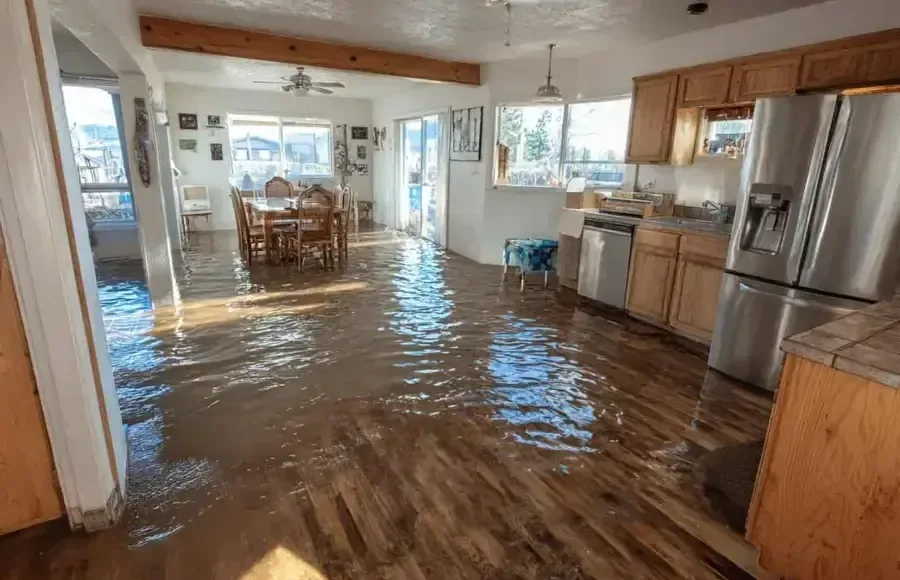
Chelsea sits on a small peninsula in Boston Harbor, and when a nor'easter pushes a high tide ashore, the water that enters a building is not clean. It carries harbor silt, street runoff and drain overflow, which changes how every step of the cleanup is done.
Key takeaways
- Water touches the city on three sides, and most of the ground is low, about 9.8 ft above sea level.
- Tide water is handled as Category 3 from the first step, even when it looks like plain seawater.
- Carpet, pad, insulation and the bottom of drywall walls that sat in tide water are usually removed, not dried.
- Hard surfaces and framing are cleaned, disinfected and dried until moisture readings match a dry reference.
- About 15 percent of the city lies in an area of potential flooding today, and that share is projected to reach 34 percent by 2081.
Why harbor water reaches a low peninsula
The city is bordered by the Mystic River and Chelsea Creek to the south and east, the Island End River to the west and Mill Creek to the north. Most of the ground is low, about 9.8 ft above sea level.
On January 4, 2018, a nor'easter pushed Boston Harbor to a record tide of 15.16 ft, higher than the mark set in the Blizzard of 1978. That figure is a harbor wide record, and it shows how high a surge can climb when storm wind and a high tide coincide.
The low ground around Island End and Chelsea Creek was once marsh that was filled in. The Island End district saw record coastal flooding in the 2018 nor'easters.
The first day: safety before cleanup
Standing tide water and household electricity do not mix. If water reached outlets, appliances or the panel, the power stays off until an electrician has checked the circuits.
Photographs come next, taken before anything is moved. The tide mark on the walls, the depth on the floor and the debris left behind show what the storm brought in.
- Stay out of standing water, and wear boots and gloves if entry cannot wait.
- Lift papers, electronics and keepsakes to high shelves or to another floor.
- Photograph the tide mark, the damaged contents and the debris.
- Keep children and pets out of the wet area until it has been cleaned.
Why tide water is treated as Category 3
Restoration work sorts water into categories by how contaminated it is. Clean supply water is Category 1, and harbor water is Category 3, the most contaminated, because it mixes with runoff and drain overflow before it reaches a building.
That label sets the plan. The team works in protective clothing, keeps wet material out of dry rooms and removes anything that cannot be cleaned all the way through, which is the core of coastal flood cleanup.
What is removed
Porous materials soak up contaminated water, and drying alone cannot make them safe again.
- Carpet and carpet pad.
- Insulation inside wet wall cavities.
- Drywall at the bottom of walls, cut back above the tide mark.
- Mattresses and upholstered furniture.
- Particle board cabinets and shelves that swelled.
What is cleaned and kept
Tile, concrete, metal, sealed wood and wall framing can stay. They are washed, treated with a disinfectant and then dried.
Pulling the water out
A water extraction crew starts at the lowest point and works toward the edges, using truck-mounted or portable extraction units. Shallow water that a mop cannot lift is pulled from carpet, tile seams and the gaps beneath baseboards.
Speed matters because water keeps moving. Left alone, it wicks upward into the bottom of walls and soaks into the edges of the subfloor.
- Extract standing water from the lowest point first.
- Remove soaked carpet and pad in sections and bag them for disposal.
- Cut drywall above the tide mark so wet insulation can come out.
- Wash and disinfect hard surfaces before any drying equipment goes in.
Sorting contents and keeping records
Once the water is out, two jobs run side by side: sorting what can be saved, and recording what was lost.
Sorting belongings
Belongings need sorting as soon as the water is out, because tide water leaves a film of silt and contamination on everything it touches.
Hard, nonporous items such as glass, metal tools and sealed plastic can usually be washed and disinfected. Paper, cardboard, books and soft goods that sat in the water are usually discarded.
Irreplaceable photographs and papers are worth setting aside in a bag and asking about before they are thrown out. Contaminated paper is rarely safe to keep, so the advice depends on the item.
- Wash and disinfect glass, metal, hard plastic and sealed wood.
- Bag and discard soft goods, cardboard and paper that sat in the water.
- Photograph every discarded item first and jot down what it was.
- Set irreplaceable items aside and ask before deciding.
Records worth keeping for a claim
A claim after a coastal flood runs on records. Photographs taken before cleanup, the drying log and a list of discarded items give an insurer something concrete to evaluate.
Flood and wind coverage differ from policy to policy, so the wording of the policy decides what is paid. A restoration team documents the work but does not decide coverage.
- Dated photographs and video of every room before cleanup.
- The drying log with the readings from each visit.
- A written list of discarded items with age and estimated value.
- Receipts for emergency costs such as extraction and equipment.
Drying what stays
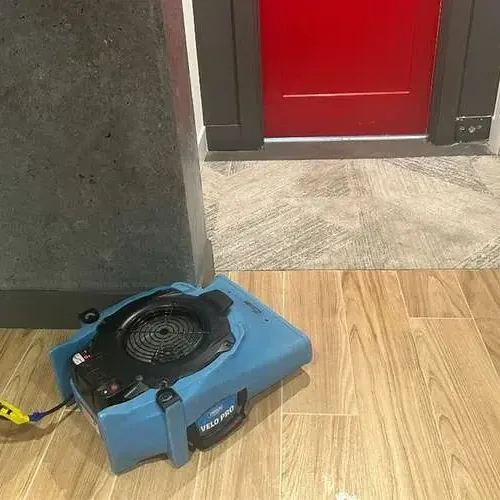
After the wet material is out, structural drying takes over. Air movers push dry air across floors and into wall cavities while dehumidifiers pull moisture out of the room.
The crew measures framing, subfloor and masonry on the first visit and on every return visit. The target is a reading within 2 to 4 points of a dry reference taken from a part of the building that stayed dry.
Equipment moves as the wet spots shrink and stays until the last reading comes back dry. Wood and drywall that stay damp invite mold, so the readings, not the calendar, decide when the work ends.
- Readings are logged at every visit so progress is on paper.
- Dehumidifiers are sized to the volume of the wet space.
- Air movers are repositioned as the wet areas change.
What the flood maps say about the next storm
About 15 percent of the city lies in an area of potential flooding today, and that share is projected to reach 34 percent by 2081. Those are planning numbers, not a forecast for any one street.
Chelsea and Everett plan a coastal storm surge barrier on the Island End River, where the floodplain covers about 500 acres with 5,000+ residents, 800+ buildings and 11,000 jobs. Whatever protection is built, a storm tide can still put water inside a building, and the steps above apply.
If heavy rain also pushed sewage up a floor drain, the job shifts toward the full sewage cleanup process, which follows the same contaminated water rules.
Questions
Is storm tide water the same as rain water?
No. Rain that enters through a roof or window starts out cleaner. Tide water mixes with harbor sediment, runoff and drain overflow, so it is handled as Category 3.
Can wet carpet be saved after a storm tide?
Carpet and pad that sat in tide water are usually removed. Contaminants soak into the fibers and the backing, and cleaning cannot reach all of them. Hard flooring and framing are cleaned and dried instead.
Should the power stay off in a flooded building?
Yes, until an electrician has checked the circuits, outlets and panel the water touched. Wet wiring is a shock risk, and drying equipment needs safe power.
Does a flooded ground floor need different work than a lower level?
The steps match: extraction, removal of porous materials, cleaning and drying. The difference is mostly scale and how far up the walls the water climbed.
How long does drying take after a tide flood?
It depends on the depth of the water, the materials and the weather, so there is no fixed number. Drying is finished when moisture readings match a dry reference, not on a set day.
What happens to food and medicine that touched tide water?
Food, drinks and medicine that were covered by tide water are thrown out. Contamination cannot be washed off reliably, even from packaging that looks intact.